
The Garden of Gethsemane is where, according to the Gospels, Jesus prayed in agony the night before his crucifixion, and it remains one of the most moving places a visitor to Jerusalem can stand. At the foot of the Mount of Olives, just across the Kidron Valley from the Old City walls, a small grove of ancient olive trees still grows beside the Church of All Nations. This guide to the Garden of Gethsemane covers what happened here, what you will see today, and exactly how to visit.
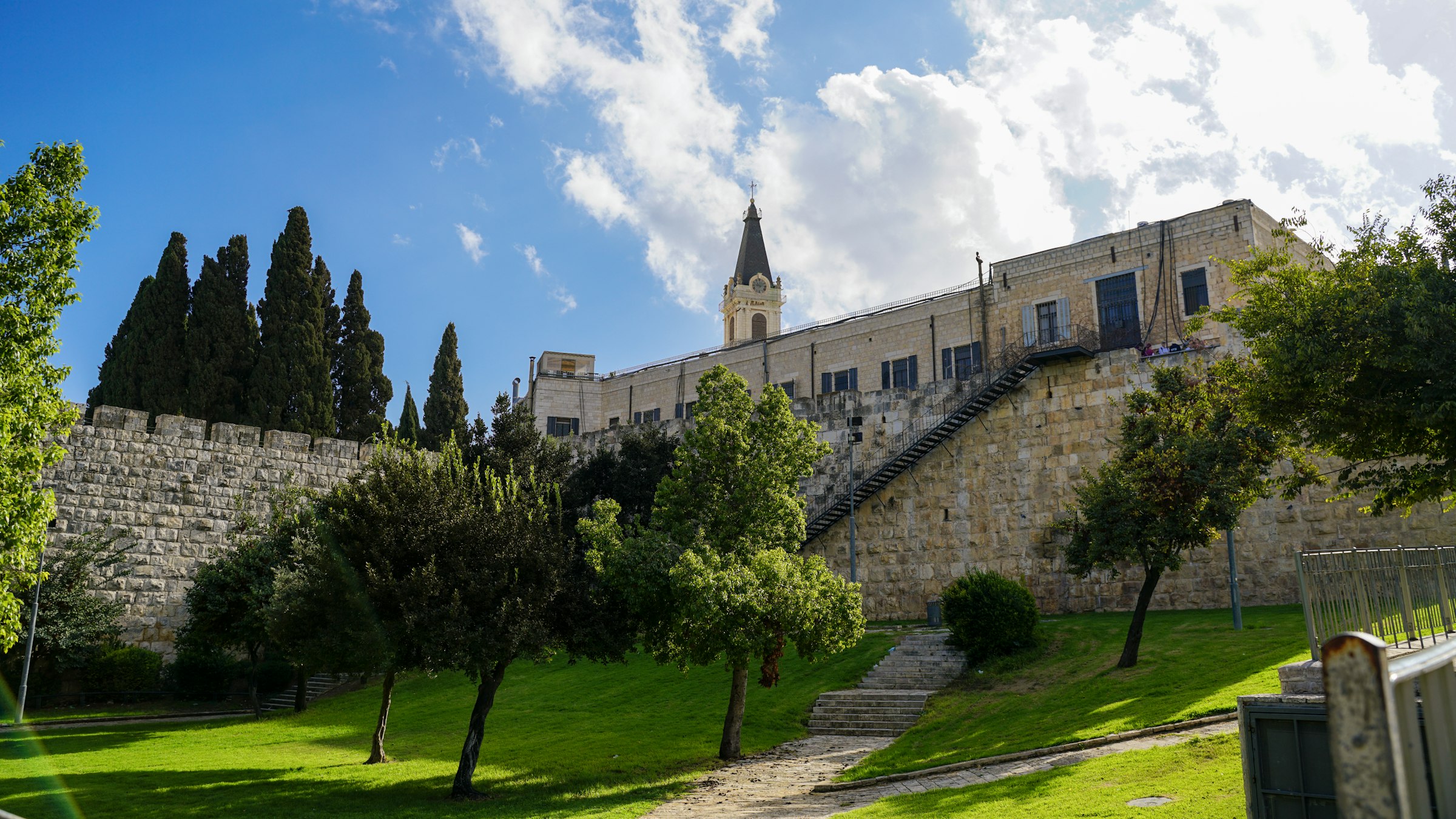
What is the Garden of Gethsemane?
The Garden of Gethsemane is a small olive grove at the base of the Mount of Olives in Jerusalem, traditionally remembered as the place where Jesus prayed and was arrested on the night before his death. The name comes from the Aramaic Gat Shmanim, meaning oil press, which points to its long history as a working olive grove. For Christians it marks the start of the Passion, the hours between the Last Supper and the crucifixion.
Today the site sits beside the Church of All Nations, with the Kidron Valley separating it from the eastern wall of the Old City. A handful of gnarled olive trees grow inside a railed enclosure, and the church rises directly behind them over the rock where Jesus is said to have prayed. It is compact, quiet, and easy to combine with the other sites on the Mount of Olives.
Why the Garden of Gethsemane matters
For Christian pilgrims, the Garden of Gethsemane holds a unique weight. This is where the Gospels place the agony in the garden, when Jesus prayed that the cup might pass from him, and where Judas led the soldiers to arrest him. To stand among the olive trees here is to stand at the hinge between the Last Supper and the cross, in the actual landscape where Christians believe these events unfolded.
The garden also carries remarkable natural history. Some of its olive trees are among the oldest known, with parts of their root systems dated to well over a thousand years, which means they descend from trees that grew on this slope across many centuries of pilgrimage. For the wider background, the history of Gethsemane on Wikipedia traces how the site has been venerated since the earliest Christian centuries.
What to see at the Garden of Gethsemane
The ancient olive trees
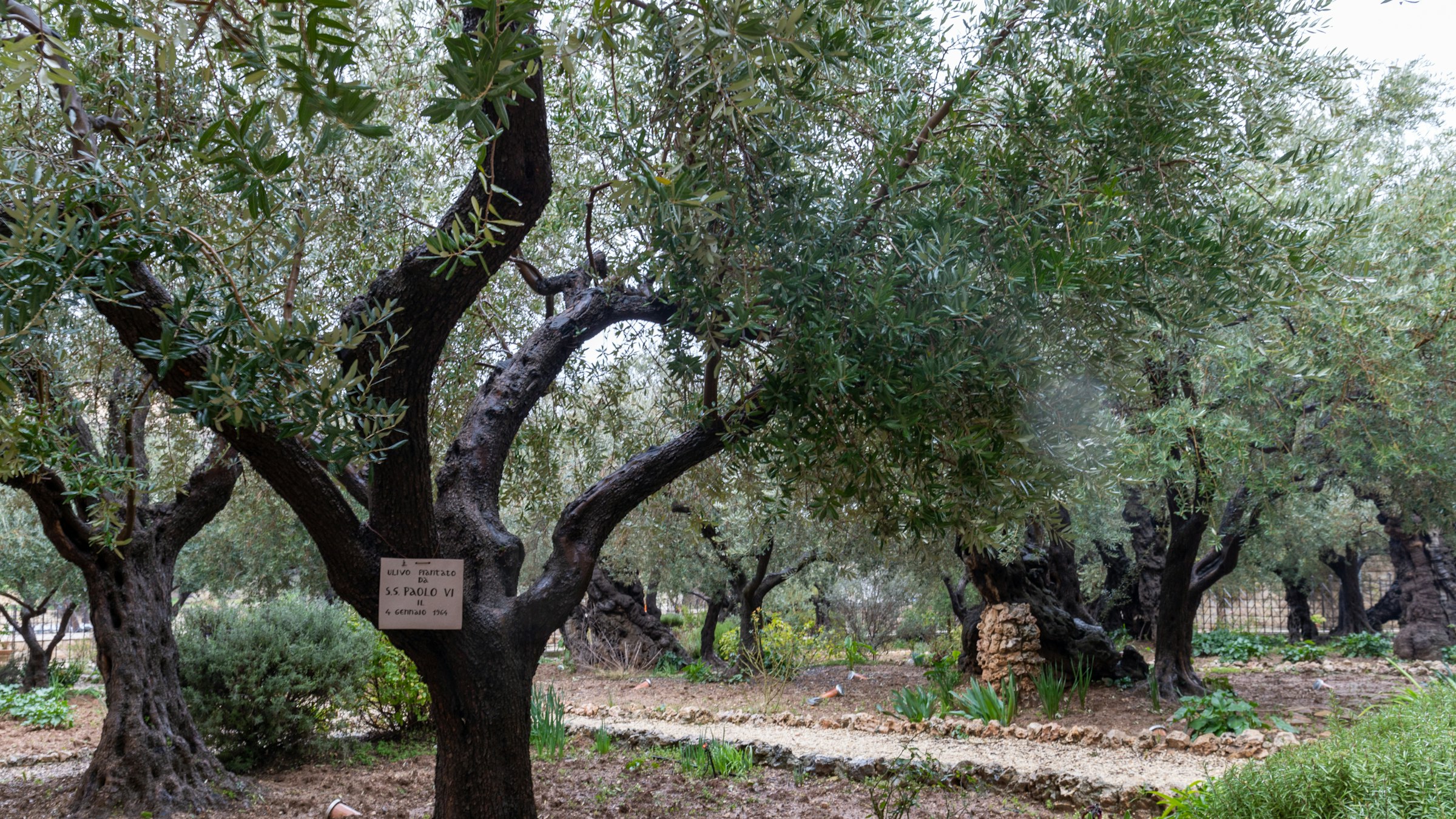
The olive trees are the heart of the garden. Eight ancient trees grow within the enclosure, their trunks split and hollowed by age, and they are protected behind a low railing so visitors view them rather than walk among them. Olive trees regenerate from their own roots, so even where the visible trunk is younger, the living root system beneath can be far older. Standing here, it is easy to picture the grove as it was two thousand years ago.
The Church of All Nations
Beside the garden stands the Church of All Nations, also called the Basilica of the Agony, built in the 1920s with funds from many countries, which gives it its name. Inside, a section of bare bedrock is exposed in front of the altar, traditionally the rock where Jesus prayed. The interior is deliberately dim, lit through violet alabaster windows that create a twilight mood fitting the night of the agony. It is one of the most atmospheric churches in Jerusalem.
The Grotto of Gethsemane and the Tomb of Mary
A short walk away, the Grotto of Gethsemane is a cave traditionally linked to the place where the disciples waited, and nearby the underground Church of the Tomb of the Virgin Mary holds what tradition marks as Mary's tomb, reached by a long flight of stone steps. Both are quieter than the main church and worth the few extra minutes if you have time.
How to visit the Garden of Gethsemane
The Garden of Gethsemane sits at the foot of the Mount of Olives, directly across the Kidron Valley from the Lions Gate of the Old City, and about an hour from Tel Aviv by road. Most visitors reach it as part of a Mount of Olives visit, walking down from the summit viewpoint past the churches on the slope and arriving at the garden and the Church of All Nations at the bottom. From there it is a short uphill walk through the Lions Gate into the Old City.
A guided tour ties the garden into the wider Gospel story rather than leaving it as an isolated stop. Our Christian Jerusalem tour follows the sites of Jesus's final days in order, including Gethsemane, the Mount of Olives, and the Church of the Holy Sepulchre, while the Jerusalem full day tour combines these with the Western Wall and the Old City for the complete picture. For the broader area, see our things to do in Jerusalem guide.
Visiting tips
Dress modestly, with shoulders and knees covered, since the Church of All Nations is an active place of worship. Go early in the morning to find the garden quiet, as tour groups fill it from mid-morning onward. The garden itself is free to enter and takes only fifteen to twenty minutes, so pair it with the Mount of Olives above and the Old City beyond. Wear sturdy shoes for the steep slope and uneven steps, and bring water, as there is little shade on the descent.
Visit Gethsemane with us
Frequently asked questions about the Garden of Gethsemane
Where is the Garden of Gethsemane?
The Garden of Gethsemane is at the foot of the Mount of Olives in Jerusalem, across the Kidron Valley from the eastern wall of the Old City, beside the Church of All Nations. It is about an hour from Tel Aviv by road and a short walk from the Lions Gate of the Old City.
Can you still visit the Garden of Gethsemane today?
Yes. The garden is open to visitors and free to enter. You view the ancient olive trees from a railing rather than walking among them, and you can step into the adjoining Church of All Nations, which stands over the rock where Jesus is said to have prayed.
How old are the olive trees in the Garden of Gethsemane?
Some of the olive trees are extremely old. Scientific testing has dated parts of their root systems to well over a thousand years, and because olive trees regenerate from their roots, the living grove descends from trees that grew on this slope for many centuries.
What is the Church of All Nations?
The Church of All Nations, also called the Basilica of the Agony, stands beside the garden over the rock where Jesus is traditionally said to have prayed. Built in the 1920s with donations from many countries, it has a dim, violet-lit interior designed to evoke the night of the agony.
How long do you need at the Garden of Gethsemane?
The garden and the Church of All Nations take about thirty minutes together. Most visitors combine them with the Mount of Olives above and continue into the Old City, making the whole Mount of Olives and Gethsemane visit a half day.
Do you need a ticket for the Garden of Gethsemane?
No. Entry to the garden and to the Church of All Nations is free. A guided tour adds the history and ties the site into the wider story of Jesus's final days, but there is no entrance fee for the garden itself.
Is the Garden of Gethsemane far from the Old City?
No. It sits just across the Kidron Valley from the Old City, a short uphill walk from the Lions Gate. Many visitors walk down the Mount of Olives, stop at the garden, and then enter the Old City on foot to continue to the Via Dolorosa and the Church of the Holy Sepulchre.
Plan your visit
The Garden of Gethsemane brings one of the most personal moments of the Gospel story into a quiet grove you can stand beside today, between the Last Supper and the cross. Browse all our Israel tours, read our full things to do in Jerusalem guide, or head back to the travel guide hub for more itineraries and tips. Questions before you book? Message us on WhatsApp at 08-6338361 or email sales@booking-tours.com and a real person from our Eilat office will answer.