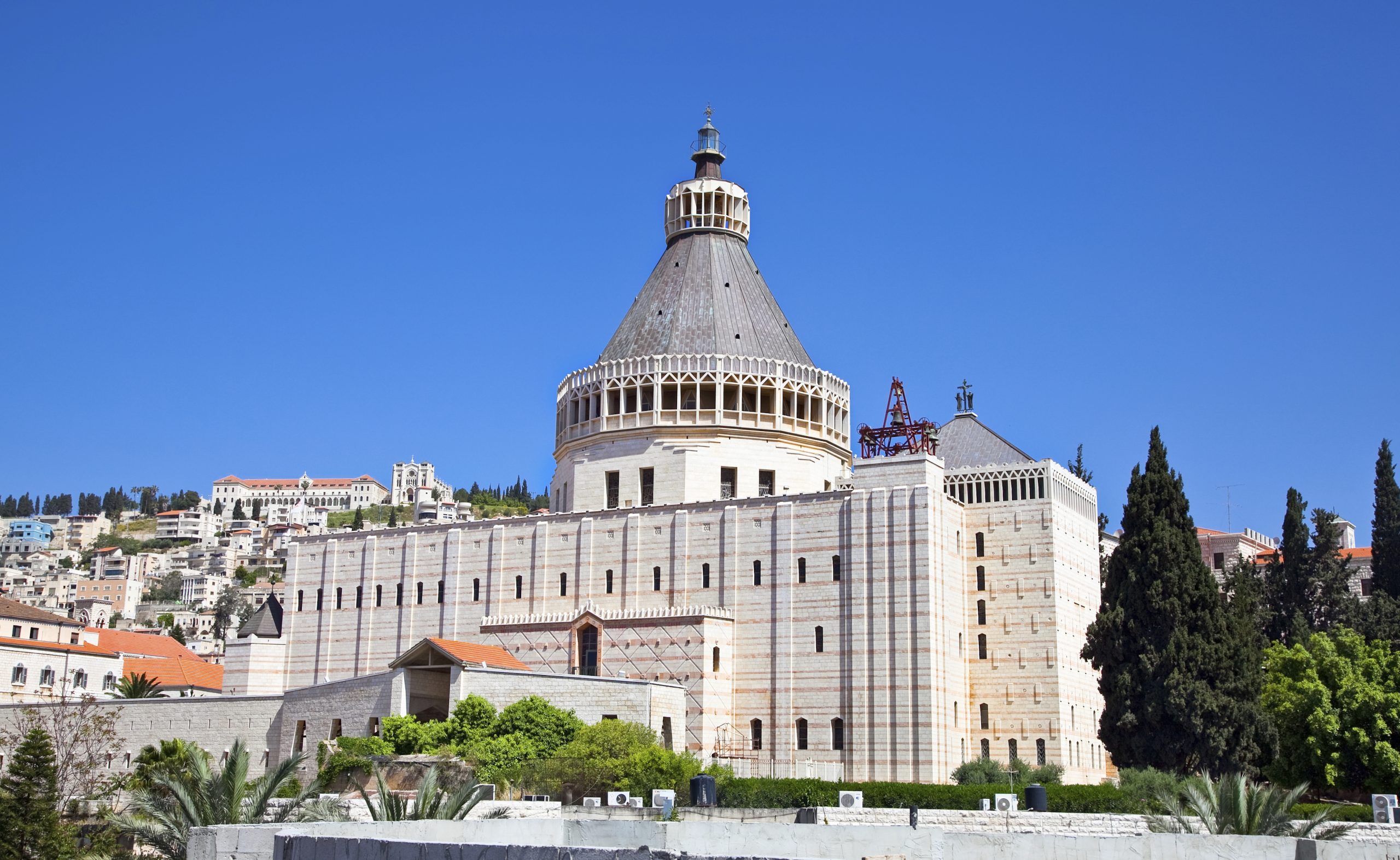
Bethlehem, Jericho & Qasr al-Yahud Day Tour
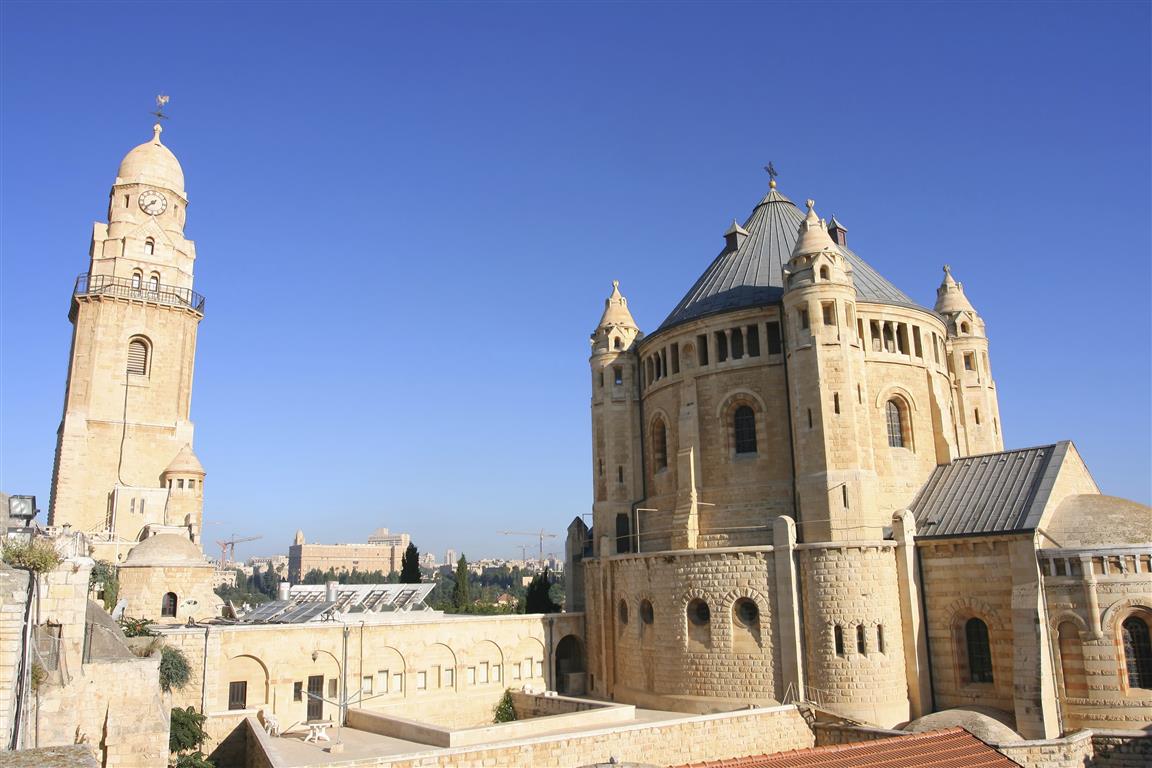
- 10 Hours
Adult
Child
Description
Experience three of the Holy Land’s most sacred biblical destinations in one powerful day.
This Bethlehem Jericho tour takes you from the oldest city on earth to the birthplace of Jesus, with a stop at the Jordan River where John baptized Christ.
Descend through the dramatic Judean Desert to Jericho, 258 meters below sea level.
Stand before the ancient Zacchaeus Sycamore Tree and gaze up at the Mount of Temptation where Jesus fasted forty days.
Visit Qasr al-Yahud on the Jordan River, the authentic baptism site with the option to be baptized yourself.
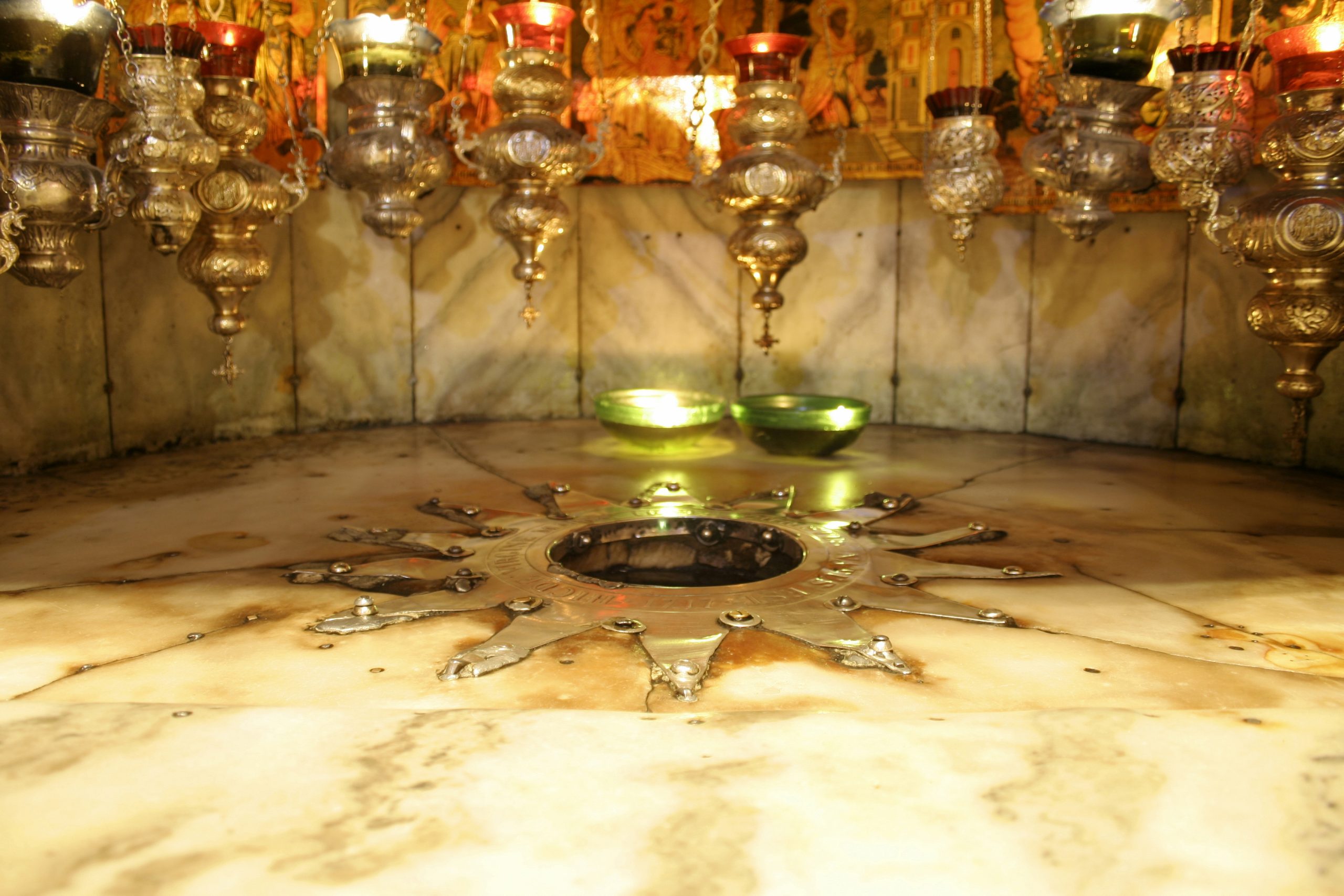
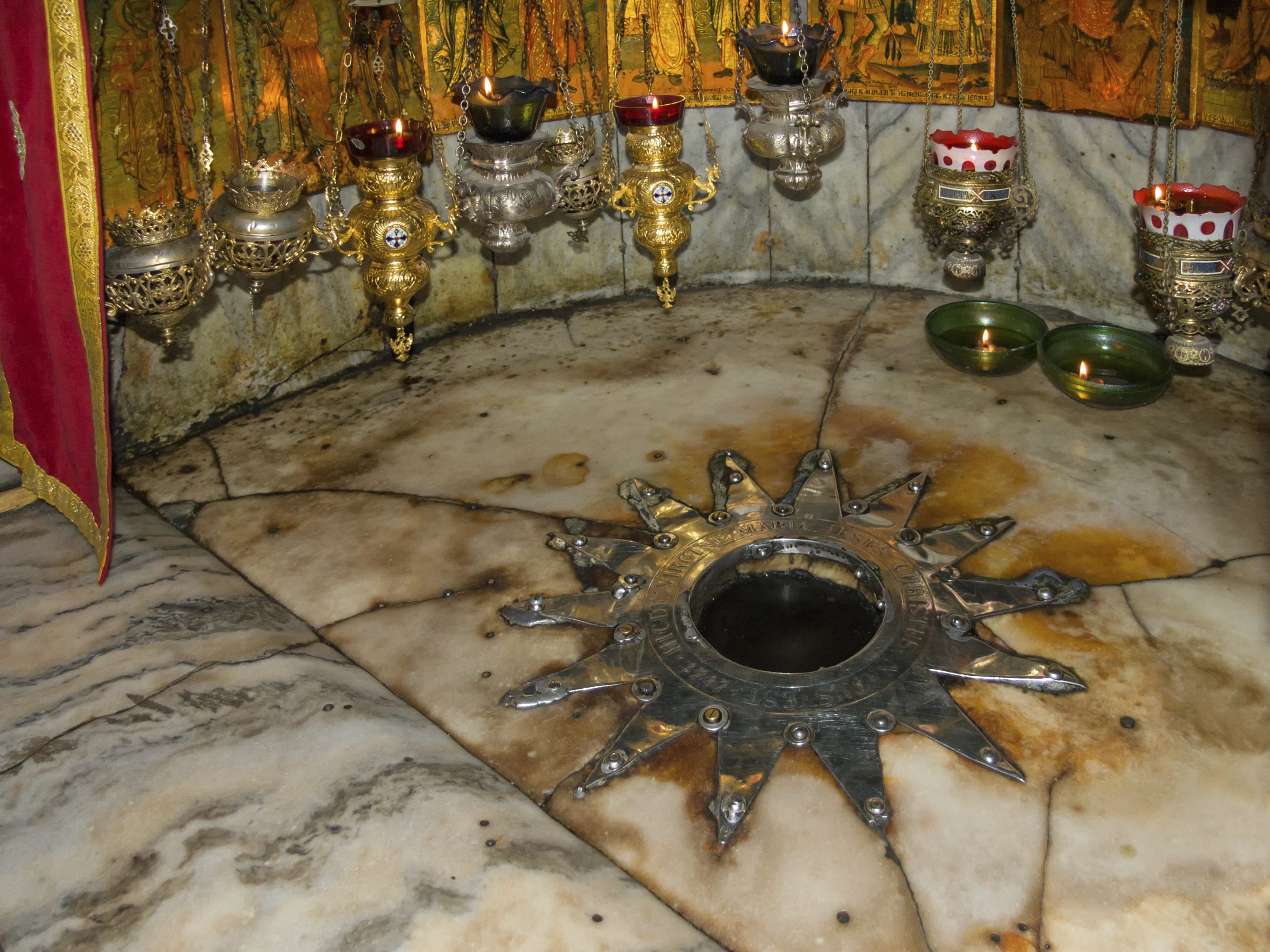
Enter the Church of the Nativity in Bethlehem through the Door of Humility and descend to the grotto where a silver star marks the exact spot of Jesus’s birth.
Walk through Shepherds’ Field where angels announced the nativity to shepherds on Christmas night.
With hotel pickup from Jerusalem, Tel Aviv, or Herzliya, licensed tour guide, and air-conditioned transport included, this Bethlehem Jericho tour lets you experience Israel’s most significant biblical landscapes without navigating checkpoints, desert roads, or unfamiliar territory yourself.
The Bethlehem Jericho tour is available in English, Spanish, French, and German, and operates Monday, Wednesday, and Saturday with guaranteed departures.
This is the essential Bethlehem Jericho tour for Christian pilgrims and anyone who wants to experience the story of Jesus beyond Jerusalem’s Old City walls.
Duration
10 Hours
Tour Type
Day Tours in Israel
Group Size
50
Language
English, Spanish, French, German
Popular Features
- AC BUS
- Expert Guide
- Family Friendly
- Licensed Guide
- Multi-lingual Guide
Highlights
- Descend through the Judean Desert below sea level, passing the Inn of the Good Samaritan and Wadi Kelt's cliff-hanging Monastery of Saint George
- Explore Jericho, the world's oldest continuously inhabited city at 258 meters below sea level
- See the ancient Zacchaeus Sycamore Tree where the tax collector climbed to see Jesus (Luke 19:1-10)
- View the Mount of Temptation and the Greek Orthodox Monastery clinging to its cliff face, where Jesus fasted forty days
- Visit Qasr al-Yahud on the Jordan River, the site where John baptized Jesus, with the option to be baptized in the sacred waters yourself
- Enter the 4th-century Church of the Nativity in Bethlehem through the famous Door of Humility
- Descend to the Grotto of the Nativity where a silver star marks the birthplace of Jesus
- Visit the Crusader Church of Saint Catherine and the underground grotto where Saint Jerome translated the Bible into Latin
- Walk through Shepherds' Field and see the Chapel of the Angels where the birth of Jesus was announced
- Licensed tour guide (English, Spanish, French, or German) provides biblical context and historical depth at every stop
Included
- Hotel pickup and drop-off (Jerusalem, Tel Aviv, or Herzliya)
- Professional driver with air-conditioned transportation
- Licensed tour guide (English, Spanish, French, or German; select language at booking)
- Visits to all sites listed in itinerary
- All taxes and service charges
Excluded
- Lunch and beverages (budget 40-70 NIS / $11-19 per person)
- Baptism gown or towel rental at Qasr al-Yahud (available on-site, approximately 30-50 NIS)
- Cable car at Mount of Temptation (not included in this itinerary; viewpoint only)
- Gratuities for guide and driver (recommended 40-60 NIS total per person)
- Personal travel insurance
- Anything not explicitly listed under "Included"
Travel Itinerary
07:00 AM - Hotel Pickup (Herzliya / Tel Aviv)
Pickup from Herzliya hotels at 07:00 AM. Tel Aviv hotel pickup between 07:15-07:30 AM. Jerusalem guests depart at 08:30 AM (shorter distance to first sites). Our driver locates you by hotel name; wait in your lobby at the designated time.
Comfortable air-conditioned coach departs south from Jerusalem toward the Dead Sea region. Your licensed guide introduces the day's itinerary and sets the biblical context for the three major destinations you will visit: Jericho, Qasr al-Yahud, and Bethlehem. The tour is guided in your selected language (English, Spanish, French, or German). Note: guiding in Jericho and at Qasr al-Yahud is conducted in English only, regardless of your selected tour language.
09:00 AM - Judean Desert Drive: Inn of the Good Samaritan & Wadi Kelt
The road from Jerusalem drops steeply through the Judean Desert, one of the most dramatic landscape transitions in Israel. Within minutes of leaving Jerusalem's hills (800 meters above sea level), you enter a vast, sun-bleached wilderness that hasn't changed in thousands of years.
Inn of the Good Samaritan (Drive-by):
Along the ancient road from Jerusalem to Jericho, your guide points out the traditional site of the Inn of the Good Samaritan, where Jesus set one of his most famous parables (Luke 10:29-37). A man traveling this road was beaten by robbers and left for dead. A priest and a Levite passed by without stopping. Only a Samaritan, considered an outsider by Jewish society, stopped to help, bandage his wounds, and pay for his care at a nearby inn.
This parable was set along this exact road because it was historically notorious for bandits. The terrain, with its deep wadis (dry riverbeds) and hidden caves, provided perfect ambush points. Travelers in antiquity feared this route, which is why Jesus chose it as the setting for a story about compassion in dangerous circumstances.
Wadi Kelt and Monastery of Saint George:
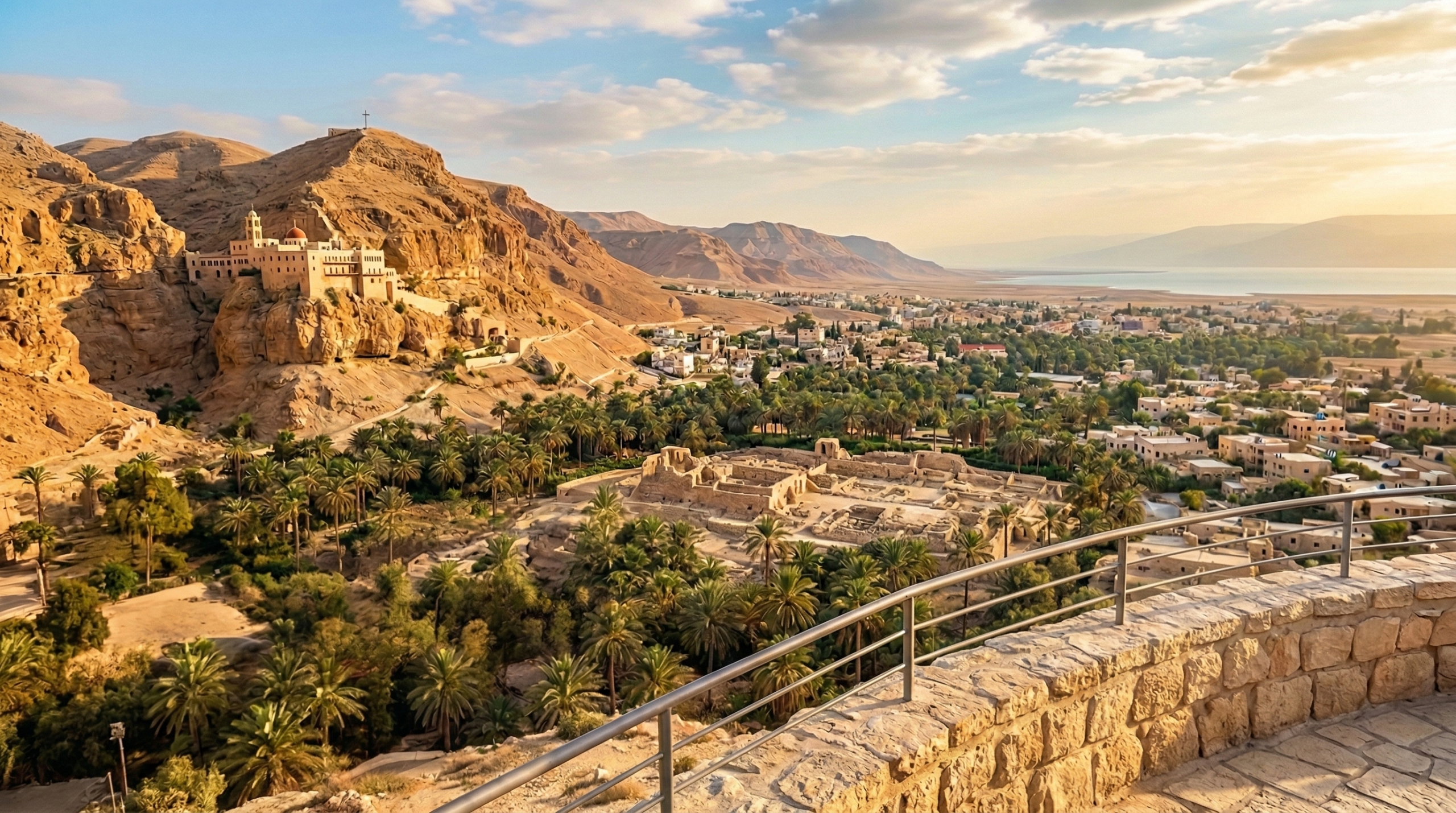
As the road winds deeper into the desert, you catch dramatic views of Wadi Kelt, a steep-sided canyon cutting through the barren landscape. Clinging to the sheer cliff face on the northern wall of the wadi is the 5th-century Monastery of Saint George of Koziba, one of the most photographed monasteries in Israel.
The monastery was founded by five Syrian monks around 480 CE and has been continuously occupied for over 1,500 years (with brief interruptions during invasions). It's built directly into the rock face, with rooms, chapels, and gardens suspended hundreds of feet above the canyon floor. Monks still live here today, accessible only by a steep trail from the canyon rim.
Your guide explains that Wadi Kelt is identified by many scholars as the "valley of the shadow of death" described in Psalm 23. The narrow, dark canyon with its towering walls makes this identification immediately understandable when you see it in person.
Sea Level Marker (Photo Stop):
The tour pauses briefly at the roadside marker indicating you have reached sea level. From here, the road continues descending another 258 meters to reach Jericho, the lowest city on earth. This marker is a popular photo opportunity, the desert stretching endlessly behind you, the Dead Sea shimmering in the distance.
09:45 AM - Jericho: The World's Oldest City
Arrive in Jericho, sitting in a lush oasis fed by underground springs at 258 meters below sea level in the Jordan Valley. The contrast with the barren desert you just drove through is striking: date palms, banana plantations, and bougainvillea appear seemingly out of nowhere. This agricultural abundance is what drew human settlement here over 10,000 years ago, making Jericho the oldest continuously inhabited city on earth.
Biblical Significance:
Jericho features in some of the most dramatic stories in both the Old and New Testaments:
Old Testament: After forty years of wandering in the desert, Joshua led the Israelites to the walls of Jericho, the first Canaanite city blocking their entry into the Promised Land. God instructed the Israelites to march around the city once a day for six days, and seven times on the seventh day, blowing rams' horn trumpets. On the seventh day, the walls collapsed and the Israelites took the city (Joshua 6). Archaeological excavations at nearby Tel es-Sultan have revealed walls and fortifications dating back to 8000 BCE, making it one of the most significant archaeological sites in the Near East.
New Testament: Jesus passed through Jericho multiple times during his ministry. After his forty-day fast on the nearby Mount of Temptation, he entered the city, and it was here that several Gospel events took place.
Zacchaeus Sycamore Tree:
Your guide takes you to the ancient sycamore tree in the center of Jericho, traditionally identified as the tree the tax collector Zacchaeus climbed to catch a glimpse of Jesus as he entered the city surrounded by followers (Luke 19:1-10).
Zacchaeus was a chief tax collector, wealthy and widely despised by the people of Jericho for collaborating with Rome and enriching himself at their expense. Being short in stature, he couldn't see over the crowd, so he ran ahead and climbed this sycamore tree. When Jesus reached the tree, he looked up and said, "Zacchaeus, come down immediately. I must stay at your house today." This scandalized the crowd, who couldn't understand why Jesus would choose to dine with a sinner. But the encounter transformed Zacchaeus, who pledged to give half his wealth to the poor and repay anyone he had cheated four times over.
The tree, gnarled and ancient with thick spreading branches, is enclosed by a low wall. Whether or not this is the exact tree from the Gospel account, it is a living sycamore of significant age in the exact location described in Luke's account, and it brings the story to life in a tangible way.
Mount of Temptation (Viewpoint):
From Jericho, look up at the imposing cliff face rising 366 meters above the city. This is Jebel Quruntul, the Mount of Temptation, where Jesus retreated into the wilderness to fast for forty days and forty nights after his baptism (Matthew 4:1-11).
During this fast, the devil appeared three times to tempt Jesus:
- First temptation: Satan told the starving Jesus to turn stones into bread. Jesus replied: "Man shall not live by bread alone, but by every word that proceeds from the mouth of God."
- Second temptation: Satan took Jesus to the pinnacle of the Temple in Jerusalem and told him to throw himself down, claiming angels would save him. Jesus replied: "You shall not put the Lord your God to the test."
- Third temptation: Satan showed Jesus all the kingdoms of the world from the mountaintop and offered them in exchange for worship. Jesus replied: "Away from me, Satan! For it is written: Worship the Lord your God, and serve him only."
Halfway up the cliff, the Greek Orthodox Monastery of the Temptation (Monastery of Qurantul) clings to the rock face, built around the cave where tradition says Jesus sheltered during his fast. The monastery is accessible by cable car (not included in this tour itinerary), but the view from below is spectacular, the white and tan building seemingly defying gravity against the bare vertical rock.
Your guide explains the geography: standing in Jericho and looking up at the Mount of Temptation, you understand the physical reality of the Gospel narrative. The wilderness here is absolute, the heat extreme, the isolation total. This is not a metaphorical wilderness; it is one of the harshest landscapes on earth.
Passport Note:
You must carry your valid passport throughout the Jericho visit. Identification checks may occur at various points.
10:45 AM - Qasr al-Yahud: The Baptism Site on the Jordan River
Leave Jericho and drive a short distance to Qasr al-Yahud, located on the western bank of the Jordan River, not far from where the river empties into the Dead Sea. This is one of the most significant biblical sites in the Holy Land, and the atmosphere here is markedly different from the bustle of Jericho.
Biblical Significance:
Qasr al-Yahud (Arabic for "Castle of the Jews") is associated with three transformative biblical events:
1. The Baptism of Jesus (Matthew 3:13-17):
This is the site where John the Baptist recognized Jesus of Nazareth and baptized him in the waters of the Jordan. As Jesus emerged from the water, the Gospels describe the heavens opening, the Spirit of God descending like a dove, and a voice from heaven declaring: "This is my beloved Son, in whom I am well pleased." This moment marks the beginning of Jesus's public ministry and is one of the foundational events of Christianity.
John had been baptizing followers in the Jordan River, calling them to repentance and proclaiming the coming of the Messiah. When Jesus arrived and asked to be baptized, John initially protested, saying he was not worthy. Jesus insisted, and the baptism that followed became the model for the Christian sacrament practiced by billions of believers for two thousand years.
2. The Israelites Crossing into the Promised Land (Joshua 3-4):
After Moses's death, Joshua led the Israelites across the Jordan River into the Promised Land. According to the Book of Joshua, when the priests carrying the Ark of the Covenant stepped into the Jordan, the waters stopped flowing and piled up upstream, allowing the entire nation to cross on dry ground. Joshua then commanded twelve men (one from each tribe) to take stones from the riverbed and pile them as a memorial, so that future generations would remember how God had brought them into the land he had promised.
3. Elijah's Ascension to Heaven (2 Kings 2:1-14):
Near this location, the prophet Elijah struck the Jordan River with his cloak, the waters parted, and he crossed over. On the other side, a chariot of fire appeared and Elijah was taken up to heaven in a whirlwind. His successor, Elisha, picked up Elijah's fallen cloak and struck the Jordan again, and the waters parted for him as well, confirming that the spirit of Elijah now rested upon him.
Your Experience at Qasr al-Yahud:
The site today is a peaceful, well-maintained area on the western bank of the Jordan River. The river here is narrow, perhaps 10-15 meters across, with the Hashemite Kingdom of Jordan visible on the opposite bank. Depending on the season, the water ranges from ankle-deep to waist-deep along the access stairs.
Wooden steps lead down to the water's edge. Many visitors come specifically to be baptized here, dressed in white baptism gowns (available for purchase or rental on-site for approximately 30-50 NIS). The baptisms are self-directed or conducted by members of your own religious group; no on-site clergy perform baptisms as part of this tour.
Even if you do not plan to be baptized, simply standing at the water's edge of the Jordan River is a profoundly moving experience. Look across the narrow river to Jordan, where early Christian tradition placed the baptism on the eastern bank (Bethany Beyond the Jordan). Today, both sites are recognized, and pilgrims visit from both sides.
Facilities at Qasr al-Yahud:
- Clean public restrooms and changing facilities
- Baptism gown sales/rental kiosk
- Small gift shop
- Covered waiting area with shade
- Drinking water
Photography:
Photography is permitted throughout the site. The approach to the river, the steps leading into the water, and the view across to Jordan all provide meaningful photo opportunities. If you or someone in your group is being baptized, consider asking a fellow traveler to photograph the moment.
If you plan to be baptized, bring:
- Change of dry clothes in a bag
- Plastic bag for wet baptism gown/clothes
- Towel
- Waterproof case or bag for phone/camera
11:45 AM - Drive to Bethlehem via Judean Mountains
Board the coach and ascend from the Jordan Valley back into the Judean Mountains, climbing over 1,000 meters elevation as you head toward Bethlehem. The landscape shifts from desert to terraced hillsides with olive groves and scattered villages.
Your guide provides context for Bethlehem's significance:
Bethlehem (Hebrew: Beit Lehem, "House of Bread") sits on the edge of the Judean Hills, about 10 kilometers south of Jerusalem. It has been a place of importance since the time of the Patriarchs. Rachel, wife of Jacob, was buried near Bethlehem (Genesis 35:19). Ruth gleaned grain in the fields around Bethlehem (Book of Ruth). Jesse, father of King David, lived here, and David was anointed king by the prophet Samuel in this town (1 Samuel 16).
The prophet Micah foretold that a ruler of Israel would come from Bethlehem: "But you, Bethlehem Ephrathah, though you are small among the clans of Judah, out of you will come for me one who will be ruler over Israel" (Micah 5:2). This prophecy is central to the Christian identification of Jesus as the Messiah, since the Gospels of Matthew and Luke both place his birth in Bethlehem.
Checkpoint and Guide Logistics:
Bethlehem is located in the Palestinian Authority. Your tour will pass through an Israeli checkpoint. This is a routine security procedure; simply have your passport accessible. Depending on the day, your vehicle may change and a local Palestinian guide may join to provide expertise on Bethlehem's sites. Your main guide coordinates the transition smoothly.
12:30 PM - Bethlehem: Manger Square and the Church of the Nativity
Arrive in Bethlehem and head directly to Manger Square, the central plaza of the city and the location of the Church of the Nativity.
Manger Square:
The wide, paved plaza serves as the civic and spiritual heart of Bethlehem. The square is bordered by the Church of the Nativity on the eastern side, the Mosque of Omar to the west (built in 1860 and named after the Caliph Omar who prayed near the church in 637 CE but refused to pray inside it, fearing his followers would later convert it to a mosque), and modern municipal buildings to the north.
On Christmas Eve each year, tens of thousands of pilgrims and visitors fill this square for midnight Mass and celebrations broadcast worldwide. Your guide describes the scene and its significance as the world's most famous Christmas gathering.
The Door of Humility:
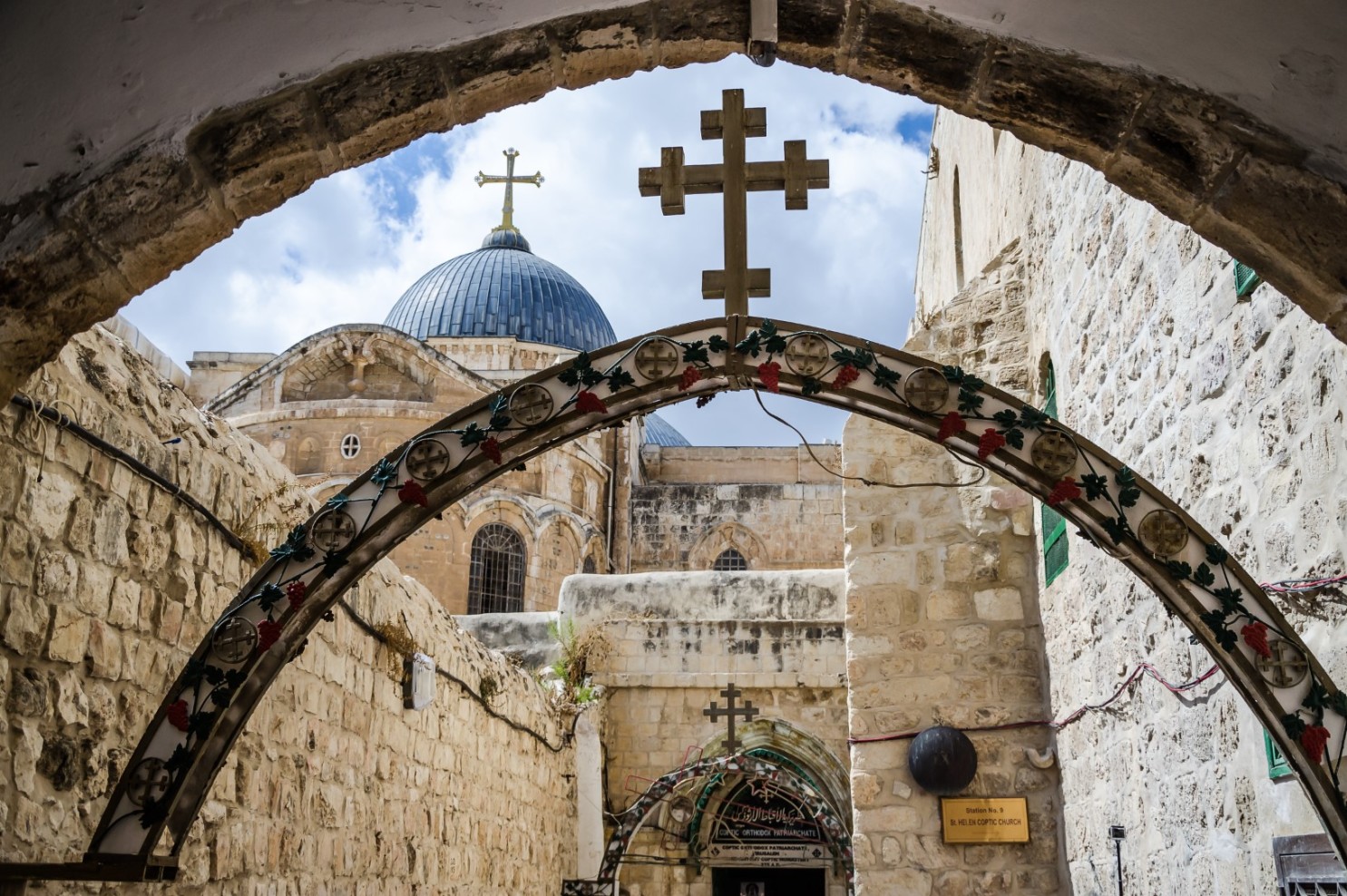
Approach the entrance to the Church of the Nativity. The original grand entrance was reduced to a tiny opening only 1.2 meters (4 feet) high during the Ottoman period, possibly to prevent soldiers from riding horses into the church, possibly to force all visitors to bow in humility as they enter the birthplace of Christ. Today, every visitor, regardless of wealth, status, or power, must duck and bow to enter. This is the famous Door of Humility, and passing through it is a memorable physical experience.
Inside the Church of the Nativity:
The Church of the Nativity was originally built by Emperor Constantine and his mother Helena in 327 CE, making it one of the oldest continuously operating churches in the world. The current structure dates largely to the 6th-century reconstruction under Emperor Justinian, with additions and renovations over subsequent centuries by Crusaders, Armenians, and Greek Orthodox clergy.
The Main Basilica:
Step inside and enter a vast nave lined with rows of red limestone columns (44 original Corinthian columns from the 4th century still stand). Above the columns, remnants of stunning 12th-century Crusader-era mosaics depict angels, saints, and scenes from the life of Christ. These golden mosaics were recently restored in a massive international conservation project and now gleam with renewed brilliance.
The wooden roof beams (donated by King Edward IV of England and Philip the Good of Burgundy in the 15th century) span the nave above. The floor in some sections has been opened to reveal fragments of the original 4th-century mosaic floor from Constantine's church, visible through glass panels.
The Grotto of the Nativity:
Descend the narrow stone stairs on the right side of the main altar into the underground grotto, the spiritual heart of the church and one of Christianity's most sacred spaces.
The grotto is a small, low-ceilinged cave illuminated by 53 silver lamps hanging from the ceiling, each belonging to a different Christian denomination. The air is warm and scented with incense. The space is intimate and hushed despite the constant stream of visitors.
The Silver Star:
Set into the marble floor beneath an altar is a 14-pointed silver star inscribed in Latin: "Hic de Virgine Maria Jesus Christus natus est" ("Here Jesus Christ was born of the Virgin Mary"). This star marks the traditional spot of Jesus's birth. Pilgrims kneel to touch or kiss the star, many with tears of devotion.
Nearby, a few steps away in the same grotto, is the Manger, a stone alcove where tradition says the infant Jesus was laid in a feeding trough because there was no room at the inn (Luke 2:7).
Important: Due to the extremely high volume of visitors, access to the Grotto of the Nativity may involve waiting in line, and your time inside the grotto is limited. On particularly busy days (holidays, weekends), entrance to the grotto may be restricted. Your guide manages timing to give you the best possible access. Even if the grotto queue is very long, you will still fully experience the main basilica, the Crusader mosaics, and the adjacent churches.
Church of Saint Catherine:
Exit the basilica and enter the adjacent Crusader-era Church of Saint Catherine, built in the 12th century and renovated in 1882. This Roman Catholic church is where the annual Christmas Midnight Mass is celebrated and broadcast live to hundreds of millions of viewers worldwide.
The church is elegant in its simplicity compared to the ornate basilica. A statue of Saint Jerome stands in the courtyard, and from here you descend into the underground grottos connected to the nativity cave system.
Saint Jerome's Grotto:
Below the Church of Saint Catherine, explore the underground chambers where Saint Jerome (347-420 CE) spent over 30 years living and working. Here, in these simple stone rooms beneath Bethlehem, Jerome completed the Vulgate, his translation of the Bible from Hebrew and Greek into Latin. The Vulgate became the standard Bible of Western Christianity for over a thousand years and profoundly influenced the development of European languages, literature, and theology.
The grottos include Jerome's study and the tomb-shrines of Saint Jerome, Saint Paula, and Saint Eustochium (Roman noblewomen who established a monastic community here alongside Jerome). The chambers are connected to the Grotto of the Nativity through underground passages, though these are not always accessible to visitors.
13:30 PM - Lunch Break in Bethlehem
Pause for lunch (not included in tour price) near Manger Square or at a nearby restaurant recommended by your guide.
Options:
- Local Palestinian restaurants serving traditional dishes: maqluba (upside-down rice and meat), musakhan (roasted chicken with onions and sumac on flatbread), lamb kebabs, hummus, falafel
- Budget approximately 40-70 NIS / $11-19 per person
- Many restaurants near Manger Square cater to tour groups with fixed-price menus
Time permitting, explore the shops around Manger Square selling olive wood carvings (nativity sets, crosses, rosaries), mother-of-pearl jewelry, embroidered Palestinian textiles, and Dead Sea cosmetics. Bethlehem is famous for its olive wood craftsmanship, and items purchased here directly support local artisans.
14:15 PM - Shepherds' Field
A short drive from Manger Square brings you to Shepherds' Field on the eastern outskirts of Bethlehem, in the village of Beit Sahour.
Biblical Significance:
This is where, on the night of Jesus's birth, an Angel of the Lord appeared to shepherds watching their flocks in the fields:
"And there were in the same country shepherds abiding in the field, keeping watch over their flock by night. And, lo, the angel of the Lord came upon them, and the glory of the Lord shone round about them: and they were sore afraid. And the angel said unto them, Fear not: for, behold, I bring you good tidings of great joy, which shall be to all people. For unto you is born this day in the city of David a Saviour, which is Christ the Lord." (Luke 2:8-11)
The shepherds then went to Bethlehem and found Mary, Joseph, and the infant Jesus in the manger, exactly as the angel had described.
Chapel of the Angels:
The Franciscan chapel at Shepherds' Field was designed by the Italian architect Antonio Barluzzi (who also designed the Church of All Nations at Gethsemane and the Church of the Transfiguration on Mount Tabor). The small, domed chapel features beautiful interior murals depicting the angel's annunciation to the shepherds. The acoustics inside the chapel are remarkable, designed to amplify voices so that even whispered prayers or hymns fill the space.
The Setting:
Standing in Shepherds' Field, you look out across gentle, terraced hills toward Bethlehem. The landscape is dotted with olive trees and low stone walls. In the distance, the modern buildings of Bethlehem rise above the historical town. This is the view the shepherds would have seen when they looked toward the city where the newborn Messiah lay.
For many visitors, this is the most emotionally moving stop on the entire Bethlehem Jericho tour. Away from the crowds and queues of the Church of the Nativity, the quiet of the fields and the simplicity of the chapel create space for personal reflection.
14:50 PM - Depart Bethlehem for Return Journey
Board the coach and depart Bethlehem, passing back through the checkpoint and heading north through the Judean Mountains toward your drop-off point.
Your guide answers final questions and provides recommendations for the rest of your time in Israel. Consider combining this Bethlehem Jericho tour with our Jerusalem Full Day Tour for a comprehensive Holy Land experience, or our Masada and Dead Sea Tour if you want to explore the Judean Desert further.
18:00-19:30 PM - Hotel Drop-Off
Return to your original pickup location:
- Jerusalem guests: Arrive approximately 18:00-19:00
- Tel Aviv guests: Arrive approximately 19:00-19:30
- Herzliya guests: Arrive approximately 19:30-20:00
Evening traffic may extend arrival by 15-30 minutes. Drop-off at a different location from pickup is available for a supplement (see pricing section).
Want to read it later?
Download this tour's PDF brochure and start your planning offline.
Frequently Asked Questions
What time does the Bethlehem Jericho tour depart and how long is it?
Pickup times vary by location:
- Herzliya: 07:00 AM
- Tel Aviv: 07:15 AM
- Jerusalem: 08:30 AM
The total tour duration is approximately 10 hours door-to-door. You return to your hotel between 18:00 and 19:30 depending on your pickup city and traffic conditions.
Your exact pickup time and hotel lobby meeting point are confirmed 24-48 hours before the tour date via email or WhatsApp. Please be in your lobby 15 minutes before the scheduled time.
If you are staying at an Airbnb or apartment rather than a hotel, a nearby hotel lobby or landmark meeting point will be arranged.
Do I need a passport for the Bethlehem Jericho tour?
Yes, a valid passport is absolutely compulsory for every participant on this tour.
No exceptions.
You will pass through identification checks at multiple points during the day, including entry to Jericho (Palestinian Authority area), the Bethlehem checkpoint, and possibly at Qasr al-Yahud.
Bring your original passport, not a photocopy. Participants who arrive without a valid passport cannot join the tour and no refund will be issued.
Israeli citizens should note: under Israeli law, Israeli citizens generally cannot enter Bethlehem (Area A of the Palestinian Authority). If you hold an Israeli passport, please contact us before booking to discuss options. You may be able to participate in the Jericho and Qasr al-Yahud portions only.
Can I be baptized at Qasr al-Yahud on the Jordan River?
Yes, visitors are welcome to be baptized in the Jordan River at Qasr al-Yahud. This is one of the most meaningful experiences available on any Holy Land tour.
How it works:
- Wooden stairs lead from the visitors' area down into the Jordan River
- Water depth varies by season from ankle-deep to waist-deep
- Baptism gowns (white robes) are available for purchase or rental on-site for approximately 30-50 NIS
- Baptisms are self-directed: you enter the water with family, friends, or your own clergy member
- No on-site clergy perform baptisms as part of this tour
- The site is shared with other tour groups and visitors; this is not a private ceremony
If you plan to be baptized, bring:
- A change of dry clothing
- Towel
- Plastic bag for wet items
- Waterproof protection for your phone or camera
Time allocation: The tour spends approximately 45 minutes at Qasr al-Yahud, which is sufficient time for baptism, changing, and spending a few quiet moments at the water's edge.
Even if you do not wish to be baptized, standing at the banks of the Jordan River where Jesus was baptized is a powerful and moving experience.
What is the difference between this Bethlehem Jericho tour and the Jerusalem and Bethlehem tour?
These are two different tours that visit different sites:
This Bethlehem Jericho tour visits:
- Judean Desert (Inn of the Good Samaritan, Wadi Kelt Monastery viewpoint)
- Jericho (Zacchaeus Tree, Mount of Temptation viewpoint)
- Qasr al-Yahud (Jordan River baptism site)
- Bethlehem (Church of the Nativity, Shepherds' Field)
The Jerusalem and Bethlehem tour visits:
- Jerusalem Old City (Mount of Olives, Western Wall, Via Dolorosa, Church of the Holy Sepulchre)
- Bethlehem (Church of the Nativity)
Key differences:
The Bethlehem Jericho tour does not visit Jerusalem at all. Instead, it explores the desert, Jericho, and the Jordan River, giving you a deeper experience of the landscape where Jesus lived, was baptized, and was tempted before beginning his ministry. Bethlehem is covered in detail with time at both the Church of the Nativity and Shepherds' Field.
The Jerusalem and Bethlehem tour gives you an intensive day in Jerusalem's Old City with a shorter visit to Bethlehem.
If you have multiple days, we recommend doing both tours on separate days for the most complete Holy Land pilgrimage experience. If you can only do one, choose based on your priorities: Jerusalem's holy sites (Jerusalem and Bethlehem tour) or the Jordan River, Jericho, and deeper Bethlehem experience (this Bethlehem Jericho tour).
Is there a dress code for the Church of the Nativity and other holy sites?
Yes, strict modest dress is required at every holy site on this tour. This is enforced and non-negotiable.
Requirements for both men and women:
- Knees must be covered (no shorts, no skirts above the knee)
- Shoulders must be covered (no tank tops, no sleeveless shirts, no strapless tops)
- Midriff must be covered (no crop tops)
This dress code applies at:
- Church of the Nativity (Bethlehem)
- Grotto of the Nativity
- Church of Saint Catherine
- Shepherds' Field Chapel
- Qasr al-Yahud baptism site
Practical tip: Wear lightweight, long pants or a maxi skirt with a t-shirt or light long-sleeved shirt. Bring a scarf or shawl that can quickly cover shoulders if you're wearing a sleeveless top. Many travelers wear quick-dry pants and a t-shirt all day, which works for both holy sites and the desert heat.
Guards at the Church of the Nativity will deny entry if you are not dressed appropriately. Do not risk missing this once-in-a-lifetime site. Dress modestly and bring a cover-up just in case.
How much walking is involved in the Bethlehem Jericho tour?
The Bethlehem Jericho tour involves moderate walking at each stop, mostly on paved surfaces and well-maintained paths.
Walking breakdown by site:
- Jericho: Short walk to Zacchaeus Tree, mostly flat (~300 meters)
- Qasr al-Yahud: Short walk from parking to river bank, flat terrain (~400 meters round trip)
- Bethlehem: Walk through Manger Square, through the Church of the Nativity complex, and down to the grotto (~600 meters total, including stairs)
- Shepherds' Field: Short walk from bus to chapel (~200 meters)
Total walking distance: Approximately 1.5-2 kilometers throughout the day, spread across multiple stops with rest time in between.
This tour is significantly less physically demanding than tours that include Jerusalem's Old City (which requires navigating cobblestone streets, steep stairs, and long distances on foot). The Bethlehem Jericho tour is suitable for seniors, families with children, and anyone with moderate mobility.
Comfortable walking shoes are recommended. The terrain at most sites is flat or gently sloping, but the stairs down to the Nativity Grotto and some stone surfaces in the church can be uneven.
Is the Bethlehem Jericho tour suitable for families with children?
Yes, families with children of all ages are welcome on this tour.
For younger children (under 6):
- The total tour duration is approximately 10 hours, which is a long day for small children
- Bring snacks, water, and entertainment for the driving segments (approximately 3 hours total driving)
- Strollers can be used at most sites but may be difficult to maneuver inside the Church of the Nativity and down the narrow stairs to the grotto; a baby carrier is recommended
- There are clean restroom facilities at Qasr al-Yahud and in Bethlehem
For school-age children (6-12):
- Children find the Zacchaeus Tree story engaging (the idea of climbing a tree to see Jesus is relatable)
- The Jordan River and the option to touch or enter the water at Qasr al-Yahud is a memorable physical experience
- The Door of Humility at the Church of the Nativity is fun for kids (they're the only ones who don't have to duck!)
- The silver star in the Nativity Grotto makes the Christmas story tangible
Pricing: Children typically receive discounted pricing. Infants ride free (one per paying adult). Check the booking form for current child rates.
Can I combine the Bethlehem Jericho tour with a Dead Sea visit?
Not on this specific tour. The Bethlehem Jericho tour focuses on Jericho, Qasr al-Yahud, and Bethlehem, and there is not enough time to add a Dead Sea beach stop.
If you want to combine Jericho and the Jordan River with Dead Sea floating, check our Jericho, Jordan River & Dead Sea tour which replaces the Bethlehem portion with 2.5 hours at a Dead Sea beach.
For the most comprehensive multi-day experience, consider:
- Day 1: This Bethlehem Jericho tour (Jericho + Qasr al-Yahud + Bethlehem)
- Day 2: Masada and Dead Sea tour (Masada fortress + Dead Sea beach)
- Day 3: Jerusalem Full Day Tour (Old City, Western Wall, Via Dolorosa, Church of the Holy Sepulchre)
This three-day combination gives you complete coverage of the Judean region's most important sites without feeling rushed at any single location.
What happens if the Church of the Nativity is too crowded to enter the grotto?
The Church of the Nativity is one of Christianity's most visited pilgrimage sites, and the Grotto of the Nativity is extremely small. On busy days (weekends, holidays, December, Easter season), the queue to enter the grotto can be very long.
Your guide manages this in several ways:
- Timing the visit to minimize queue time
- Using the available time efficiently so you see the main basilica, Crusader mosaics, Church of Saint Catherine, and Saint Jerome's Grotto while others queue for the grotto
- Assessing the queue and advising you whether waiting is feasible within the tour schedule
Even if the grotto queue is too long, you will still experience:
- The magnificent 4th/6th-century basilica with original Corinthian columns
- Recently restored 12th-century Crusader mosaics
- The Door of Humility
- Church of Saint Catherine (site of Christmas Midnight Mass)
- Saint Jerome's Grotto (where the Bible was translated into Latin)
- Manger Square
For less crowded access: The Wednesday departure tends to have fewer visitors than Monday or Saturday. Early in the season (March-April) and late in the season (November) are generally less crowded than summer or December.
If entering the grotto is the single most important experience for your pilgrimage, consider booking a dedicated Bethlehem day tour which allocates more time specifically to the Church of the Nativity and can start earlier in the morning before peak crowds arrive.
What language is the guide on the Bethlehem Jericho tour?
The tour is available in four languages: English, Spanish, French, and German. You select your preferred language when booking.
Almost all Bein Harim daily tours operate primarily in English with a second language running in parallel. Your guide delivers the tour in the language you selected at booking. On some departures, the tour may be bilingual (English plus one additional language in the same group).
Important exception: At Jericho and Qasr al-Yahud specifically, guiding is conducted in English only, regardless of which language you selected for the rest of the tour.
In Bethlehem, a local Palestinian guide may join the group when you cross the checkpoint. This guide will speak English as well.
If you need a tour in a language other than the four listed above, contact us about private tour options where we can arrange a guide in your preferred language (additional fees may apply).
Tour Essential Information
Minimum Participants: Tour operates with a minimum number of participants. This is a guaranteed departure, meaning the tour runs as scheduled once minimum is met.
Pickup Times:
- Herzliya hotels: 07:00 AM
- Tel Aviv hotels: 07:15 AM
- Jerusalem hotels: 08:30 AM
- Exact pickup time confirmed 24-48 hours before tour date via email and SMS
What to Bring:
- Valid passport (required; bring original, not photocopy. No passport = no tour, no refund)
- Modest clothing covering knees and shoulders (required for all holy sites)
- Comfortable walking shoes (1.5-2 km walking over paved and stone surfaces)
- Sun protection (hat, sunglasses, SPF 50+ sunscreen; desert sun is intense even in winter)
- Refillable water bottle (dehydration risk; refill opportunities may be limited between stops)
- Change of clothes + towel + plastic bag (if planning baptism at Qasr al-Yahud)
- Camera or smartphone
- Cash in Israeli Shekels (for lunch, tips, baptism gown rental, souvenirs)
- Light jacket (optional; Bethlehem in the mountains can be cool, especially in winter months. Churches can be cool inside)
Dress Code:
- All holy sites: Modest attire REQUIRED. Shoulders and knees must be covered at Church of the Nativity, Shepherds' Field Chapel, and Qasr al-Yahud. Guards will deny entry if dressed immodestly.
- Qasr al-Yahud: If being baptized, you will change into a white baptism gown (available on-site). Bring a change of dry clothes for after.
Physical Requirements:
- Easy to moderate fitness level
- Mostly flat terrain with some stairs (Nativity Grotto access)
- Total walking approximately 1.5-2 km spread across multiple stops
- Suitable for seniors
- Strollers possible but baby carriers recommended for Church of the Nativity interior
Age Restrictions:
- Children of all ages welcome
- Children receive discounted pricing
- One infant (0-3 years) rides free per paying adult
- Full-day duration (10 hours) may be tiring for very young children
Health & Safety:
- Hydration: Drink water throughout the day. The Judean Desert and Jordan Valley are extremely hot, especially April-October
- Sun exposure: Apply sunscreen before departure and reapply at stops
- Jericho altitude: 258 meters below sea level. No altitude concerns, but heat is amplified
- Inform guide at tour start of any medical conditions
- Bring necessary medications
Language:
- English: Guaranteed on all departure days
- Spanish: Available on select days (check schedule at booking)
- French: Available on select days (check schedule at booking)
- German: Available on select days (check schedule at booking)
- Select your preferred language when booking; subject to guide availability
- Guiding in Jericho and Qasr al-Yahud is English only regardless of selected language
From 125.00 $
Book This Tour
Have a question in mind
Looking for more info? Send a question to the tour agent to find out more.
You might also like
Travel is my life. Since 1999, I have been traveling around the world nonstop. If you also love travel, you are in the right place!