

The Petra Treasury, called Al-Khazneh in Arabic, is the carved rock facade at the end of the Siq, the narrow canyon that leads into ancient Petra in southern Jordan. You can see it on a day trip from Eilat, Aqaba or Amman, but you cannot go inside. Plan about 3 hours in Petra to walk there, look around and walk back.
★ Add Booking-Tours as a preferred source on Google
This guide is part of our Petra series, written by our Eilat team. We take guests to the Treasury most days of the week. For the big picture, start with our complete guide to Petra and Jordan. If you are coming from Israel, read our guide to visiting Petra from Eilat and our Israel Jordan border crossing guide.
Petra Treasury at a glance
| Fact | Details |
|---|---|
| Location | The Treasury, Petra, Jordan, at the end of the Siq inside Petra Archaeological Park, next to the town of Wadi Musa |
| Built | 1st century AD by the Nabataeans, most often linked to King Aretas IV |
| Height | About 40 meters (roughly 130 feet), according to most sources |
| Can you go inside? | No. The interior is closed to visitors |
| How long to spend | 20 to 40 minutes at the Treasury itself, about 3 hours for a guided round trip through the Siq |
| Best time | Early morning for fewer people. Spring and autumn for comfortable walking weather |
| How to get there | Walk from the Visitor Centre through the Siq, or join a day tour from Eilat, Aqaba or Amman |
| What it costs | Included in your Petra ticket. See tour prices below |
| Booking tip | On tours from Israel, pre-pay the Jordan border and visa fees on our booking form so you skip cash at the border |
What is the Petra Treasury?
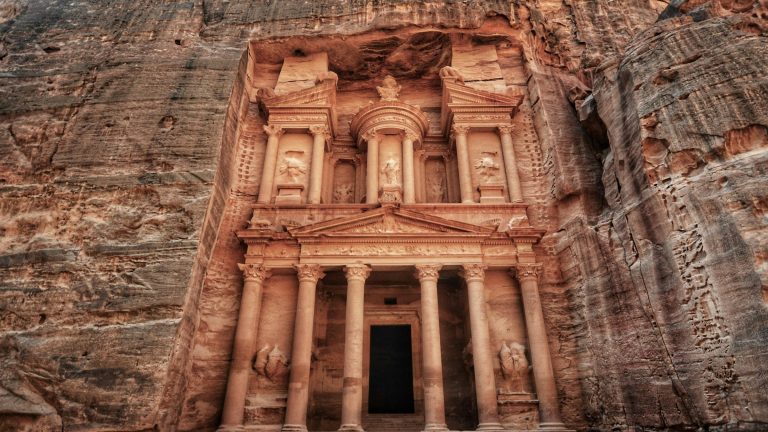
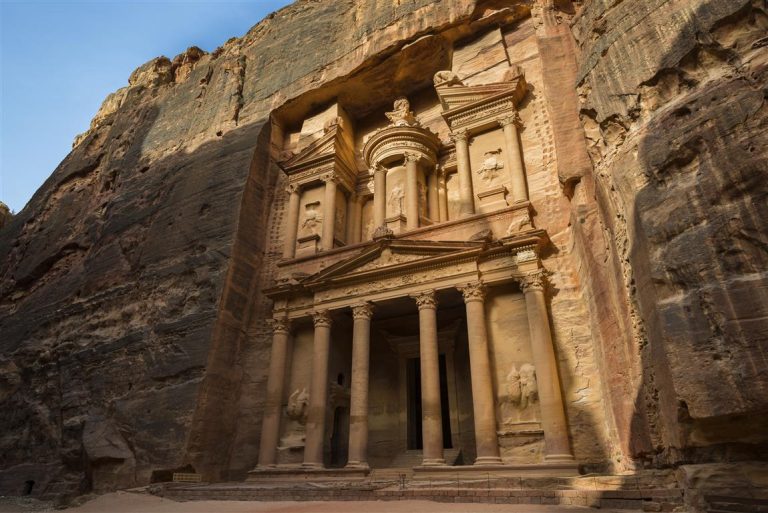
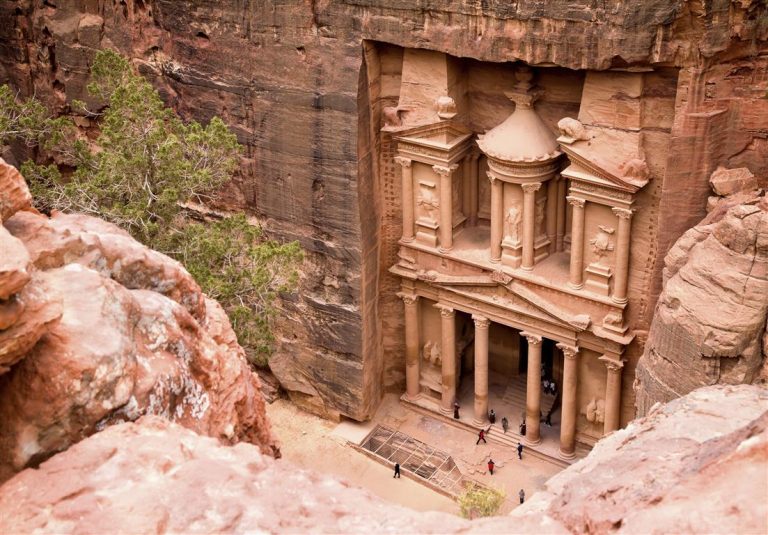
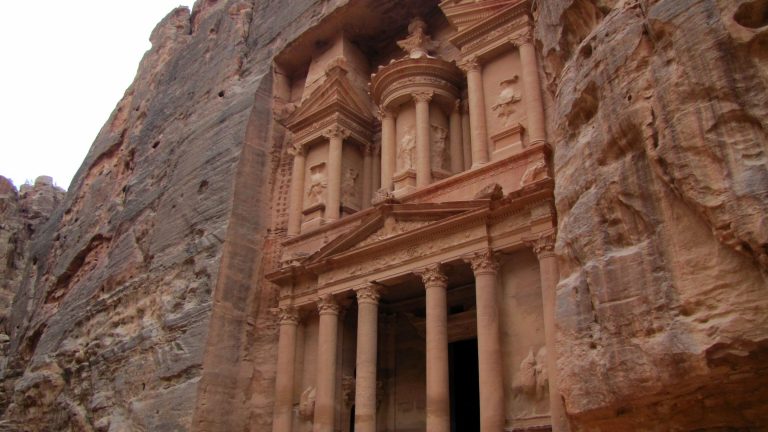
The Treasury is a two-story facade carved straight into a sandstone cliff. It was not built from blocks. The Nabataeans cut it from the top down, shaping columns, statues and a round pavilion out of the living rock.
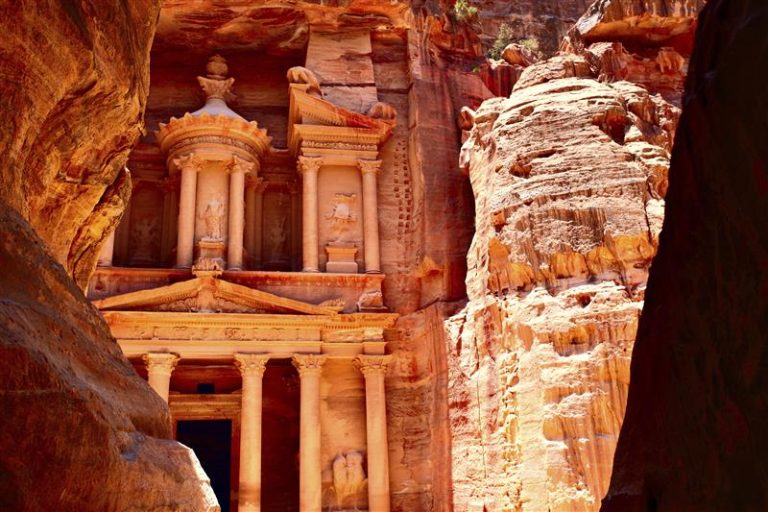
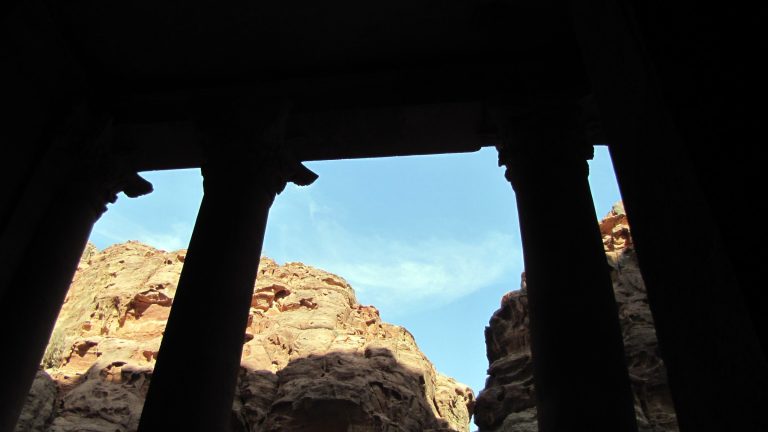
It is the first big monument you see in Petra, and the most famous. That is because the Siq opens right in front of it. After a long walk in a dark, narrow canyon, you get a slice of pink stone that slowly turns into the full facade.
Who built the Treasury and when?
The Nabataeans built it in the 1st century AD. Most historians link it to King Aretas IV, who ruled Petra at the height of its wealth from the incense and spice trade. There is no inscription that proves this, so you will hear it as the common attribution, not a fact set in stone.
Most experts think it was a royal tomb or memorial, not a bank or storehouse. Some think it also had a religious role. The carvings mix Nabataean, Greek and Egyptian styles, which tells you how connected Petra was to the wider world.
Why is it called Al Khazneh?
Al Khazneh simply means the treasury in Arabic. The name came from local Bedouin, not from the Nabataeans. They believed a pharaoh or a band of robbers hid gold in the urn at the top of the facade. More on that legend below.
How tall is the Petra Treasury?
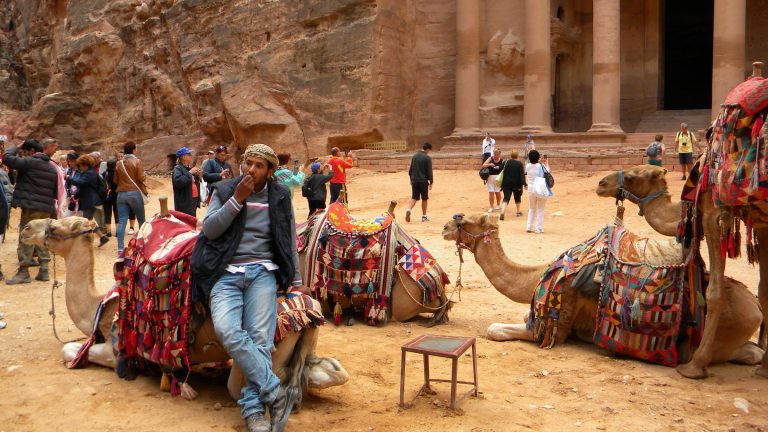
The Petra Treasury is about 40 meters (roughly 130 feet) tall, and around 25 meters wide by most estimates. That is about the height of a 12-story building. Stand next to the base columns and look at the people around you to get a real sense of scale.
Can you go inside the Petra Treasury?
No, you cannot go inside the Petra Treasury. A low rope and guards keep visitors on the plaza. You can stand at the base, look into the doorway and take photos, but you cannot climb the steps or enter the rooms.
What is inside the Treasury?
Inside, there is a plain, square main chamber with a smaller room on each side and one at the back. The walls are bare. There is no gold, no carving and no treasure. Many guests are surprised, because the outside is so detailed and the inside is so simple.
Why can't you go inside?
Access was closed to protect the monument. Millions of visitors touching the soft sandstone and walking up the worn steps would cause real damage. Archaeologists have also dug under the plaza in front of the facade and found older tombs, including a tomb reported in 2024, so the area below your feet is part of the site too.
Our take: Do not waste your photo time trying to peek into the doorway. The view from the middle of the plaza, looking up, is much better than the dark interior.
The walk from the Visitor Centre through the Siq to the Treasury
Everyone reaches the Treasury the same way. You enter at the Visitor Centre in Wadi Musa and walk down a wide path called Bab al-Siq. You pass large carved stone blocks called Djinn Blocks and the Obelisk Tomb on your left.
Then you enter the Siq itself. It is a natural crack in the mountain, about 1.2 km (three quarters of a mile) long. The walls rise high on both sides, and in some places the path is only a few meters wide. In total, the walk from the gate to the Treasury is roughly 2 km and takes most people 30 to 45 minutes at an easy pace.
Look for the details that most people walk past:
- Water channels: Nabataean channels are cut into the Siq walls. They carried water into the city.
- Camel caravan relief: A worn carving of camels and traders, life size, on the left side of the Siq.
- Small niches: Carved spots for sacred stones, where travelers once prayed for a safe trip.
The path is mostly downhill on the way in, so the walk back is slightly uphill. Horses are offered on the first open stretch before the Siq, and horse carts run through the Siq. If you use one, agree on any tip before you start.
Our take: The most common mistake we see is guests rushing through the Siq to get to the Treasury. Slow down for the last few minutes. The first glimpse of the facade through the gap is the moment you will remember, so have your camera ready before the final bend.
Myths vs facts: the urn, the bullet holes and Indiana Jones
Your guide will tell you stories at the Petra Treasury. Here is how to separate them.
- Myth: Gold is hidden in the urn. Local Bedouin believed treasure was hidden in the stone urn on top of the facade. Fact: the urn is solid rock. There is nothing inside it.
- The bullet holes are real. Look closely at the urn and you will see pock marks. The story is that people shot at it over the years, hoping to break it open and make the gold pour out. It did not work.
- Myth: The Holy Grail is inside. The Treasury appears in the 1989 film Indiana Jones and the Last Crusade. In the film, the entrance leads to long tunnels. In real life, it leads to the simple rooms described above.
- Myth: It was a bank. The name suggests money, but the evidence points to a tomb or memorial for a king.
The figures on the facade are also worth a look. The central female figure on the upper level is often identified with the goddess Isis, and the two riders on the lower level are often read as the twins Castor and Pollux. Erosion has worn many faces away.
Best time of day for photos at the Petra Treasury
The best time for photos at the Petra Treasury is early morning, right after the gates open, when the plaza is quiet. Later in the morning, sunlight reaches the facade and the stone turns a warm orange and pink. By afternoon, the facade is mostly in shade, which gives soft, even light with no harsh shadows.
Crowds matter more than light. The plaza fills up by late morning, when tour groups arrive from Aqaba, Amman and Israel. Opening hours change by season, so check the latest times on the official Petra Development and Tourism Region Authority site before you go.
- Shoot from the end of the Siq for the classic framed view.
- Step to the far side of the plaza and use a wide lens to fit the whole facade.
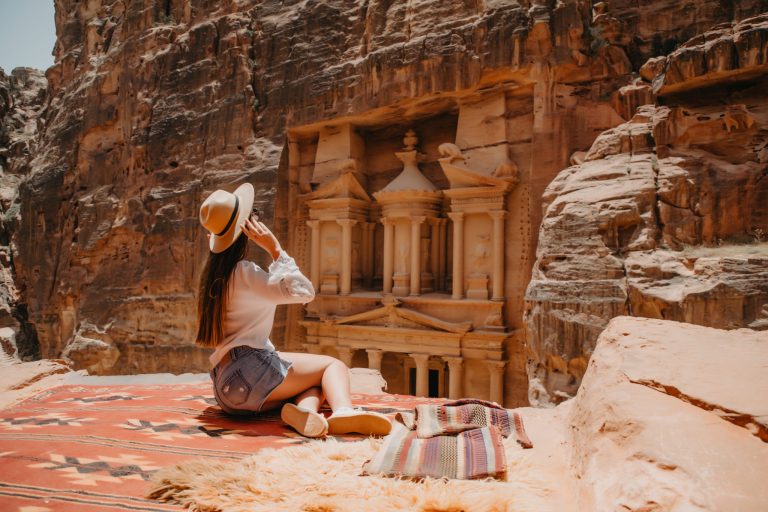
- For a portrait, stand at the plaza edge and let the facade fill the frame behind you.
Treasury Petra viewpoints: the Al-Khubtha trail
The Treasury viewpoint is at the top of the Al-Khubtha trail, which gives you the famous view looking down on the facade from the cliffs opposite. The trail starts near the Royal Tombs, past the Treasury and the Street of Facades, and climbs a long set of stone steps. A small Bedouin tea stand usually sits at the top.
It is a steep climb with little shade. In our experience, you need at least 2 extra hours to do it without rushing. There is also an unofficial path to a viewpoint above the Treasury that some locals offer to show you. We do not recommend going up there alone.
Our take: On a one-day trip from Eilat with about 3 hours inside Petra, you cannot do Al-Khubtha and still see the main city. If the view from above is a must for you, stay overnight in Wadi Musa and hike it the next morning.
How to visit the Treasury Petra on a day trip from Eilat, Aqaba or Amman
Most of our guests see the Treasury on a day trip. Here is how each starting point works. You can compare every option in our guide to the best Petra tours from Eilat, Aqaba, Amman, Tel Aviv or Jerusalem.
From Eilat
Our Petra day tour from Eilat starts with hotel pickup around 08:10. You cross at the Yitzhak Rabin (Arava) border, meet your Jordanian guide and drive to Petra. You get about 3 hours inside Petra, with lunch in Wadi Musa, and you are back in Eilat around 20:00.
The Jordan border and visa fees are about $140 per person in total ($60 for infants), not included in the tour price. You can pay them in cash at the border, or pre-pay them on the booking form so you skip the cash payment.
From Aqaba
If you are already in Jordan, Aqaba is the closest big city to Petra. There is no border to cross, so you have a simpler morning. Our Aqaba tours pick you up at your hotel, usually around 09:00.
From Amman
Amman is a longer drive, so the day starts earlier. Read our guide to getting to Petra from Amman to choose between a day trip and an overnight stay.
Is a day trip enough?
A day trip is enough to walk the Siq, see the Treasury, the Street of Facades and the Theater, and get a good feel for the city. It is not enough for the Monastery, which is about 800 steps up and adds 2.5 to 3 hours.
Our take: If you have only one day, skip the idea of reaching the Monastery. Guests who try often end up running back to the bus, tired and stressed. Spend your time at the Treasury and the lower city instead, and come back for the Monastery on a longer trip.
Planning your visit in 2027: tickets, fees and what to wear
If you are planning a Petra Treasury 2027 trip, here is what you need to know. All prices and rules below are current at the time of writing in November 2026 and can change. Always check the official sources before you travel.
Petra tickets
The Treasury is included in your Petra entry ticket. At the time of writing, visitors who spend at least one night in Jordan pay 50 JD for 1 day, 55 JD for 2 days and 60 JD for 3 days. Day visitors who do not stay overnight pay 90 JD. Our Petra tours include your entry ticket. Petra by Night is a separate ticket. Read our Petra by Night guide to see which nights it runs.
Jordan Pass and visas
The Jordan Pass covers your Petra entry, but it waives the visa fee only if you stay 3 or more nights in Jordan. For most day trippers from Israel, it does not save money. Our Jordan Pass guide explains when it pays off.
What to wear
There is no strict dress code at the Treasury, but modest clothing that covers shoulders and knees is respectful in Jordan. Wear good walking shoes, a hat and sunscreen. The Siq can be cool in winter mornings and very hot in summer afternoons. See our Petra weather guide for month by month advice.
Safety
As of November 2026, our Petra tours run as normal, and Petra is a well-managed site with tourist police on duty. Border crossings can close at short notice for holidays or other reasons, and we update guests if that happens. Check your government's official travel advisory for Jordan before you book.
Comparing Petra Treasury tours
All of these tours walk the Siq to the Treasury with a licensed guide. Guides speak English. In Petra, local Spanish and French-speaking guides are free, and German, Italian and Russian-speaking guides cost a small flat fee per booking. You can browse all of our Petra tours from Israel in one place.
| Tour | Best for | Duration | Price |
|---|---|---|---|
| Petra group day tour from Eilat | Travelers staying in Eilat who want the classic day with a guide and lunch | 12 hours | from $261 per adult |
| Private Petra day tour from Eilat with guide and lunch | Couples and families who want their own guide and pace | Full day | from $320 per adult |
| Petra day tour from Aqaba with horse ride and sightseeing | Guests already in Aqaba or arriving by cruise | Full day | from $190 per adult |
| Private Petra tour from Aqaba with skip-the-line entry | Travelers in Aqaba who want a private car and guide | Full day | from $230 per adult |
| Petra day tour from Amman with lunch and hotel pickup | Visitors based in Amman with one free day | Full day | from $360 per adult |
| Petra day tour from Tel Aviv with flights | Visitors in central Israel who do not want a long overnight bus | Full day | from $400 per adult |
Day tours have free cancellation up to 36 hours before the start time. Tours that include flights or hotels, like the Tel Aviv option, are non-refundable, so book those once your dates are firm.
Tours that include Petra Treasury
Live prices and dates, hotel pickup on most tours, and a local team in Eilat that answers on WhatsApp.
 Petra Day Tour from Tel AvivFrom $400View tour
 Petra Day Tour from Jerusalem with Flights from Tel AvivFrom $540View tour
 Private Petra Day Tour from Tel Aviv with FlightsFrom $545View tour
 Private VIP Petra 2 Day Tour from EilatFrom $420View tour
 Petra and Wadi Rum 2 Day Tour from EilatFrom $499View tour
 Petra Tour from Tel Aviv by Flight with Overnight in EilatFrom $500View tour
Frequently asked questions about the Petra Treasury
How long do you need at the Petra Treasury?
Plan 20 to 40 minutes at the Treasury itself. Add 30 to 45 minutes each way for the walk from the Visitor Centre. On our day tours, you get about 3 hours inside Petra, which covers the Treasury and the lower city.
How much does it cost to see the Treasury?
The Treasury is included in your Petra ticket. At the time of writing, that is 90 JD for day visitors and from 50 JD for visitors staying at least one night in Jordan. Prices can change, so check the official Petra site.
Can you visit the Petra Treasury from Israel in one day?
Yes. From Eilat, you cross at the Arava border in the morning and are back around 20:00. From Tel Aviv or Jerusalem, our tours fly you to Ramon Airport near Eilat, which makes a one-day trip realistic.
Is the Petra Treasury worth it?
Yes, for most people it is the highlight of a trip to Jordan. The walk through the Siq and the first view of the facade are hard to match. Just set your expectations: you see it from outside only.
Is the Treasury real or just from the movies?
It is real and about 2,000 years old. It appeared in Indiana Jones and the Last Crusade, but the tunnels in the film do not exist. You can read more about the site on its UNESCO World Heritage listing.
Is it hard to walk to the Treasury?
The walk is easy for most people. The path is mostly flat and slightly downhill on the way in, with some uneven stone. Horse carts can carry people with limited mobility through the Siq.
Do I need a guide to visit the Treasury?
You can walk to the Treasury alone, since there is only one path. A guide adds the history, points out carvings you would miss and handles timing on a day trip. On tours from Israel, the guide also helps at the border.
What else is near the Treasury?
Past the Treasury you reach the Street of Facades, the Theater and the Royal Tombs. Nearby, Little Petra is a quieter site, and a night at a Wadi Rum camp pairs well with Petra on a longer trip.
Keep planning
More travel guides for this trip
 Petra & JordanPetra from Aqaba 2027: Distance, Day Trips, Cruise Passenger Tips and Which Tour to Choose, from Local GuidesRead the guide →
 Petra & JordanPetra from Tel Aviv in 2027: Flight vs Drive, 1, 2 or 3 Days, Border Crossings and Real Costs from Local GuidesRead the guide →
 Petra & JordanPetra from Israel in 2027: Eilat vs Tel Aviv vs Jerusalem, Border Crossings, Costs and Day Trips from Local GuidesRead the guide →
Plan your trip
Standing in front of the Treasury after the Siq opens up is one of those moments our guests talk about for years. We run this trip most days of the week, and we are happy to help you pick the right day and route. For most travelers staying in Eilat, our full day Petra tour from Eilat is the easiest way to get there and back with a guide, your Petra ticket and lunch.
Have a question about the border, fees or which tour suits your group? Message us on WhatsApp at 08-6338361 (international +972 8-633-8361) or email [email protected]. You can also explore more ideas in our Petra and Jordan travel hub before you book.
Cover photo: Boris Debic, CC BY-SA 4.0, via Wikimedia Commons