
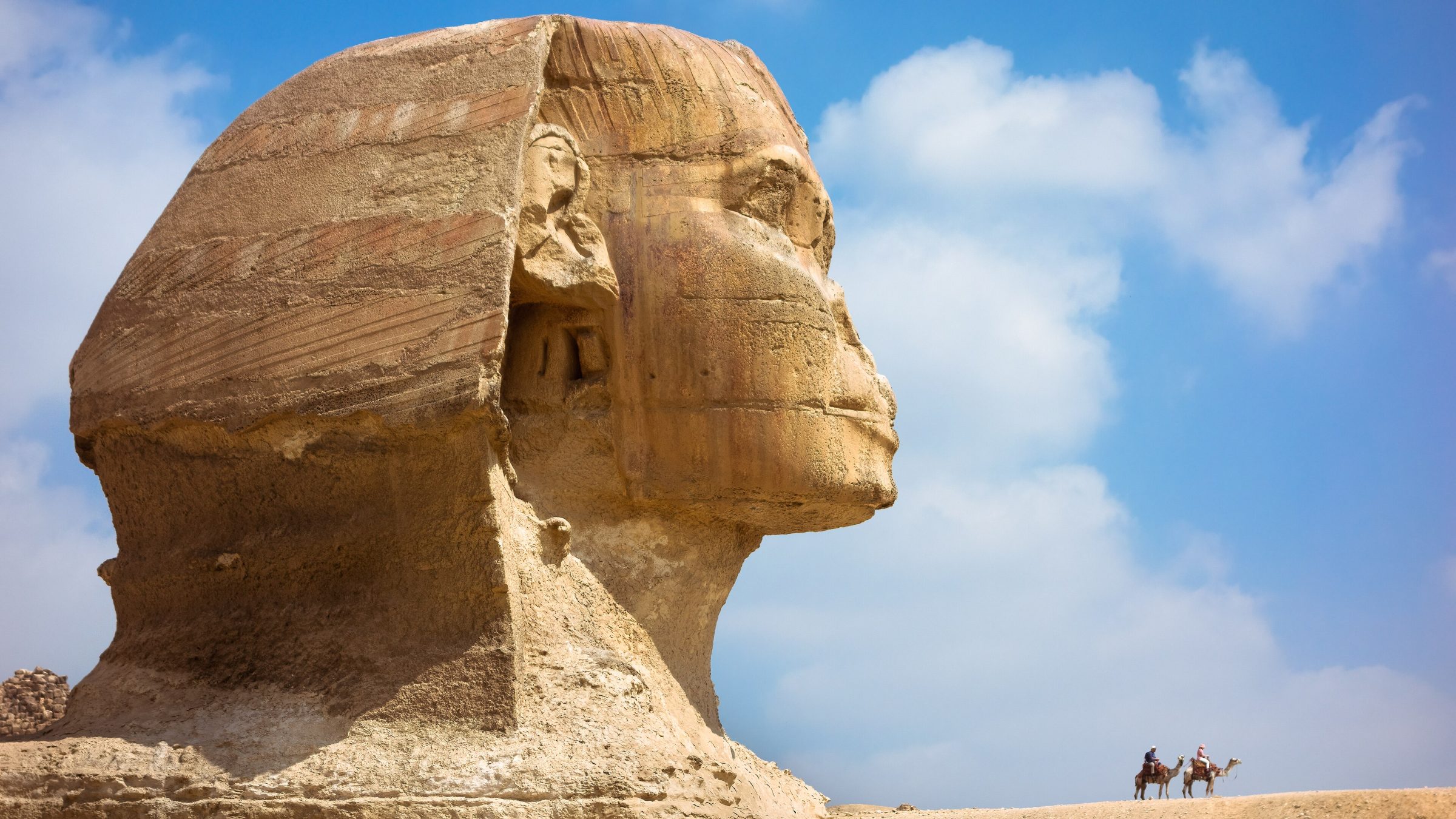
The Great Sphinx of Giza is a giant limestone statue with a lion's body and a human head, carved about 4,500 years ago on the Giza Plateau just outside Cairo. You see it on the same ticket and the same visit as the pyramids, usually from a viewing terrace beside the Valley Temple of Khafre. Plan around 45 to 60 minutes for the Sphinx itself, and go early in the day for softer light and thinner crowds.
★ Add Booking-Tours as a preferred source on Google
We run trips from Eilat to Cairo every week, and the Sphinx is where most of our guests go quiet for a minute. This guide shares what we tell them on the bus: what you are looking at, where to stand, and how to avoid the worst of the crush.
The Great Sphinx of Giza at a glance
| Key fact | Details |
|---|---|
| Location | Giza Plateau, on the west edge of greater Cairo, Egypt |
| How long to spend | 45 to 60 minutes at the Sphinx, about half a day for the whole plateau |
| Best time | October to April for cooler weather, early morning for light and crowds |
| How to get there | By car or tour from Cairo, or on a guided tour from Eilat via the Taba border |
| What it costs | Included in the Giza Plateau ticket, which can change. See our tour prices below |
| Booking tip | Pre-pay your Egypt visa and border fees on our booking form to save time at Taba |
What the Great Sphinx of Giza is and why it matters
The Sphinx was carved straight out of the bedrock of the plateau, not built from blocks. Ancient workers cut away the stone around a natural outcrop and shaped what was left. That is why the body shows bands of harder and softer rock, and why some layers have worn away faster than others.
Most Egyptologists link the statue to the pharaoh Khafre, of the Fourth Dynasty, who also built the second pyramid at Giza. The face is thought to be his, wearing the royal nemes headcloth. The statue faces east, toward the rising sun, and it is roughly 73 meters long and about 20 meters high. It is one of the largest single-stone statues in the world.
It sits inside the area UNESCO lists as Memphis and its Necropolis, the Pyramid Fields from Giza to Dahshur. If you want a deeper read on its history and the debates around it, the Wikipedia entry on the Great Sphinx of Giza is a good starting point.
The missing nose and other stories
Guests always ask about the nose. The popular story blames Napoleon's soldiers, but drawings made decades before his army arrived already show the face without it. A medieval Egyptian historian wrote that a man damaged the face in the 14th century, and many scholars accept some version of that account.
Over the centuries, desert sand buried the body again and again. Between the paws stands the Dream Stele of Thutmose IV. It tells how the young prince fell asleep in the shade of the Sphinx, dreamed it asked him to clear away the sand, and later became king. The statue was only fully dug out in the 20th century.
The Valley Temple viewpoint: where you actually see the Sphinx
Many first-time visitors expect to walk right up and touch the Sphinx. You cannot. The statue sits in a sunken enclosure, and you view it from a raised terrace on its southeast side, next to the Valley Temple of Khafre.
The usual route takes you through the Valley Temple itself, and this is worth slowing down for. Its walls are made of huge limestone blocks faced with red granite, and the inner hall has tall square granite pillars. Some of the finest statues of Khafre were found here. It is one of the best-preserved Old Kingdom temples you can walk through.
From the temple you come out onto the terrace with the Sphinx in front of you. Next to it are the ruins of the Sphinx Temple, which is usually viewed from outside. Look uphill and you can trace the line of the ancient causeway that once linked the Valley Temple to Khafre's pyramid.
How the Sphinx fits a Giza visit
On most guided days, the Sphinx comes last or near the end. You start up on the plateau with the Great Pyramid and the panoramic viewpoint, then drive down to the Sphinx area. Our main Pyramids of Giza guide covers tickets, going inside a pyramid and the full plateau route.
Seeing the Sphinx and pyramids together is the classic Egypt photo, and the terrace is where you get it. Khafre's pyramid rises right behind the Sphinx's head, so the two line up in one frame.
Photo tips for the Sphinx and pyramids
The Sphinx faces east, and you look at it from the east side. That makes morning the best time for photos, because the sun lights its face. In the afternoon the sun moves behind the statue and the pyramids, so the face falls into shadow and the sky gets bright.
- Stand toward the left end of the terrace to place Khafre's pyramid directly behind the head.
- Move to the right end for a side view that shows the full length of the lion body.
- Try the forced perspective shots, like the "kiss" or the hand touching the nose. Have your photographer crouch low and step back.
- Use a mid-range zoom if you have one. A wide phone lens makes the Sphinx look smaller than it feels in person.
- Be patient at the railing. Groups come and go in waves, and a clear spot often opens within a few minutes.
Our guides know the angles and will happily take your photo. Do not hand your phone to strangers offering help, as some will ask for money after.
Crowds and timing at the Sphinx
The terrace is narrow, and nearly every visitor to Giza ends up there. Tour buses tend to arrive mid-morning, and that is when the terrace is at its busiest. Arriving around opening time makes a real difference.
Our day tour from Eilat travels overnight, so you reach Cairo early and are at the plateau before most of the city's tour groups. That is one of the quiet advantages of starting in the dark.
Best season to visit
October to April is the most comfortable time. Days are mild and the sun is gentler. December and January are popular, so expect more people. Summer is very hot on the plateau, and there is little shade near the Sphinx, so go as early as you can if you travel then.
Around the spring and autumn equinoxes, the sun sets over the shoulder of Khafre's pyramid when seen from the Sphinx. Local photographers gather for it. It is a lovely sight if your timing lines up, but most visitors will not be there at sunset.
Planning your visit to the Great Sphinx of Giza in 2027
If you are planning the Great Sphinx of Giza 2027 trip now, a few things are worth checking close to your date. Ticket prices, opening hours and entry gates at Giza have changed in recent years. There is a newer visitor center and site transport on the plateau, and arrangements may keep shifting.
The Giza Plateau ticket covers the Sphinx area. Extra tickets apply for going inside the pyramids. All prices and hours we know of are current at the time of writing only. Check the official Egyptian Ministry of Tourism and Antiquities site for the latest before you go.
The Grand Egyptian Museum is close to the plateau, and many travelers pair it with Giza. If you have two days or more, that pairing makes a full and rewarding trip.
Safety and travel advisories
As of November 2026, Cairo and Giza receive large numbers of foreign visitors, and tourist police are posted around the plateau. Some governments advise against travel to parts of the Sinai Peninsula, and advice can change at short notice. Read your own government's current advisory, for example the US State Department travel site, before you book and again before you travel.
Practical tips for visiting the Sphinx
These are the things we remind every group about before they step off the bus. Most of them come from watching first-timers get caught out.
- Dress code: There is no formal dress code at Giza. Light, loose clothing that covers shoulders and knees is respectful and keeps the sun off.
- Shoes: Wear closed, comfortable shoes. The ground is sandy and uneven in places.
- Sun: Bring a hat, sunglasses, sunscreen and water. Shade near the Sphinx is limited.
- Cash: Carry small Egyptian pounds for restrooms and small tips.
- Vendors: Hawkers and camel touts are persistent. A polite, firm "no, thank you" and walking on works best.
- Passport: On tours from Israel you cross at Taba. Check that your passport meets Egypt's entry rules, and pre-pay the Egypt visa and border fees on our booking form so you do not need cash at the crossing.
Who the Sphinx visit suits
Almost everyone. The walk from the bus to the terrace is short and mostly level, so it works for families and older travelers. Kids love the size of it, and history fans can spend a long time in the Valley Temple. If you have limited mobility, tell us when you book and we will plan the day around it.
How to visit the Great Sphinx of Giza from Israel: tours compared
A lot of travelers searching for Sphinx Egypt trips do not realize how doable it is from Israel. From Eilat, you cross into Egypt at Taba and drive through the Sinai to Cairo. All of the tours below include the Sphinx and pyramids with a guide.
| Tour | Best for | Duration | Price |
|---|---|---|---|
| Private Cairo day tour from Eilat | Travelers short on time who want the pyramids and Sphinx in one push | Full day | from $290 |
| 2 day Cairo tour from Eilat with hotel night | First-timers who want Giza, the museum, Saqqara and the bazaar without rushing | 2 days | from $550 |
| Cairo and Luxor tour from Eilat by sleeper train | History lovers who want Giza plus the Valley of the Kings and Karnak | 4 days | from $749 |
| 4 day Cairo tour from Eilat with Saqqara | Travelers who want a slower pace and 4-star hotel nights in Cairo | 4 days | from $780 |
| 5 day Israel, Jordan and Egypt tour from Tel Aviv | Visitors who want Jerusalem, Petra and the pyramids in one trip | 5 days | from $1512 |
The day tour is intense but very popular. You leave Eilat in the evening, travel overnight, see Giza at its quietest, and return the next night. Day tours have free cancellation up to 36 hours before the start time.
The 2 day tour is our usual suggestion for first-timers. You get the Sphinx in the morning, then time for the Egyptian Museum, Saqqara, Coptic Cairo and Khan el-Khalili, with a hotel night and dinner. Note that tours including hotels or flights are non-refundable.
On the 5 day three-country tour, Jordan border and visa fees total 140 USD per person, and you can pre-pay them on the booking form. Petra entrance is 130 USD per person for one day. If you already have a hotel in Cairo, our 8 day Egypt tour with Nile cruise, from $1950, adds Luxor and Aswan.
Pairing Cairo with South Sinai
Since our Cairo trips cross the Sinai, some guests also add a separate trip to the mountains. Our guides to St Catherine Monastery and climbing Mount Sinai for sunrise explain how those work from Eilat. You can browse everything in our Cairo and Egypt tours hub or the full Booking-Tours travel guide.
Tours that include Great Sphinx Of Giza
Live prices and dates, hotel pickup on most tours, and a local team in Eilat that answers on WhatsApp.


 8 Day Egypt Tour with Nile Cruise from CairoFrom $1,950View tour


Frequently asked questions about the Great Sphinx of Giza
How long do you need at the Great Sphinx of Giza?
Plan about 45 to 60 minutes for the Sphinx, including the walk through the Valley Temple and time for photos. For the whole Giza Plateau with the pyramids, allow around half a day. On our tours, the guide sets a pace that gives you both.
How much does it cost to see the Sphinx?
The Sphinx area is included in the general Giza Plateau ticket. Prices change, so check the official Egyptian Ministry of Tourism and Antiquities site before you go. Our tours from Eilat start from $290 for the private day tour.
Can you touch the Sphinx or walk around it?
No. The statue sits in a protected enclosure, and visitors view it from a terrace next to the Valley Temple. You get a clear, close view, and the forced perspective photos let you "touch" it in pictures.
Can you visit the Sphinx and pyramids from Israel?
Yes. From Eilat you cross into Egypt at the Taba border and drive to Cairo. We run day tours and multi-day trips, and you can pre-pay the Egypt visa and border fees on our booking form.
What is the best time to visit the Sphinx?
Early morning is best, because the sun lights the Sphinx's face and the crowds are thinner. October to April is the most comfortable season. Mid-morning is usually the busiest time on the terrace.
Is there a dress code at the Sphinx?
There is no strict dress code. Light clothing that covers your shoulders and knees is respectful and protects you from the sun. Wear comfortable closed shoes for the sand and uneven ground.
Who built the Great Sphinx of Giza?
Most Egyptologists believe it was carved for the pharaoh Khafre, around 4,500 years ago. It lines up with his Valley Temple and his pyramid. A few theories suggest other dates, but the Khafre link is the mainstream view.
Is the Sphinx worth it?
Yes, for nearly every traveler. It is short to reach, easy to walk to and unlike anything else you will see. Seeing it with Khafre's pyramid behind it is a moment our guests talk about for years.
Keep planning
More travel guides for this trip
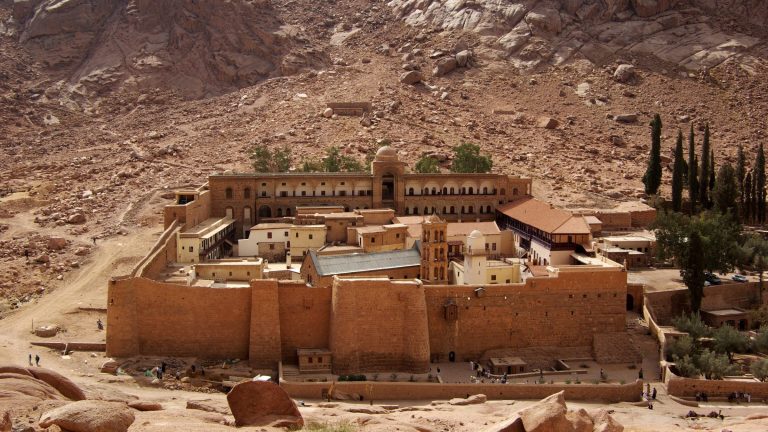 Egypt & SinaiSt Catherine Monastery 2027: A Local Guide to the Burning Bush, the Mount Sinai Sunrise Climb and Crossing from Eilat via TabaRead the guide →


Plan your trip
Standing in front of the Sphinx at sunrise, before the buses arrive, is one of the best mornings you can have in Egypt. We make that drive from Eilat every week, and we know how to time it right. For most first-timers, our 2 day Cairo tour from Eilat gives the best balance of the Sphinx, the pyramids and the rest of Cairo.
Message us on WhatsApp at 08-6338361 (international +972 8-633-8361) or email [email protected] with your dates and questions. You can also browse every option in our Cairo and Egypt tours and we will help you pick the one that fits.
Cover photo: Petar Milošević, CC BY-SA 4.0, via Wikimedia Commons