

Sarona Market in Tel Aviv is a large indoor food hall in the restored Sarona neighborhood, close to the Azrieli towers and HaShalom train station, where you can eat, shop for gourmet ingredients and sit down for a meal under one roof. Entry is free, and you pay only for what you eat or buy. Plan on one to two hours, and pair it with a walk through the old Templer houses outside.
★ Add Booking-Tours as a preferred source on Google
Our guides lead groups through Tel Aviv every week, and many guests ask us where to eat between tours. This guide covers what Sarona Market is, how to get there from Tel Aviv, Jerusalem or Eilat, the best time to go, and how to fit it into a wider trip.
Sarona Market in Tel Aviv at a glance
| Key fact | Details |
|---|---|
| Location | Sarona complex, central Tel Aviv, near the Azrieli Center and Tel Aviv HaShalom train station |
| What it is | An indoor food market with stalls, small restaurants, bakeries, delis and specialty food shops |
| How long to spend | 1 to 2 hours for the market, plus extra time for the Sarona gardens and Templer houses |
| Best time | Weekday late mornings or early afternoons, when it is less crowded |
| How to get there | Israel Railways to HaShalom, the Red Line light rail, city buses or a taxi |
| Cost | Free to enter, you pay per stall. For guided options, see tour prices below |
| Booking tip | Visit on your free afternoon after a morning tour of Jaffa or the Carmel Market |
What is Sarona Market in Tel Aviv?
Sarona Market in Tel Aviv opened in 2015 and is often described as the largest indoor food market in Israel. It sits on the lower level of a modern building at the edge of the Sarona complex. Think of it as a food hall, not a traditional open air shuk.
Inside you will find counters selling ready to eat dishes, plus shops with cheese, wine, spices, chocolate, fresh pasta, baked goods and coffee. Some places have bar seating, others share common tables. Vendors change over time, so treat any list you read online, including this one, as a guide and not a promise.
The market is clean, air conditioned and easy to navigate. That makes it a good choice on a hot August day or a rainy day in January, when outdoor markets are less fun.
The Sarona neighborhood outside
The name comes from the Sarona colony, founded in 1871 by German Templers, a Christian group that settled in the Holy Land in the 19th century. You can read a short history on the Wikipedia page for the Sarona colony. During World War II, the British authorities interned many of the Templers, and the area later became part of the Israeli government compound known as the Kirya.
Many of the old stone houses were restored and turned into shops, cafes and restaurants, set around lawns and paths. Several houses were even moved on rails to make room for a wider road. Take 20 minutes to walk around before or after you eat. It is one of the few places in central Tel Aviv where you can see buildings older than the city itself.
What to eat and buy at Sarona Market
The best approach is to walk one full loop before you order anything. Portions and prices vary a lot between stalls, and you will make better choices once you see everything.
- Israeli street food: look for hummus, falafel, sabich and shawarma style dishes. If you want the full background on these, read our guide to the best Israeli dishes by region.
- International counters: the market usually has Asian, Italian and other global options, which helps when your group cannot agree.
- Bakeries and sweets: pastries, chocolate and halva make good small bites or gifts.
- Deli and cheese shops: good for building a picnic to take to the beach.
- Spices, coffee and wine: these are easy souvenirs to pack, and many shops will vacuum seal spices on request.
If you keep kosher, check each stall. Some places are kosher and some are not, and certificates are usually displayed at the counter. Vegetarians and vegans have plenty of choice, since Tel Aviv is one of the easiest cities in the world for plant based eating.
Sarona Market vs the Carmel Market
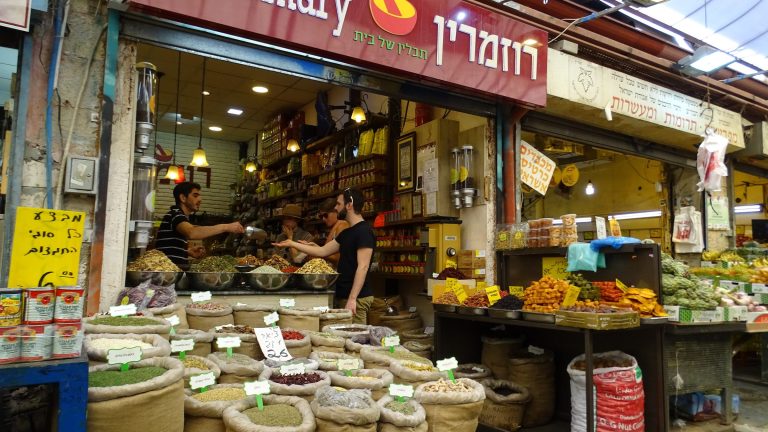
Visitors often ask which market to choose. The Carmel Market (Shuk HaCarmel) is an open air street market with fresh produce, loud vendors and lots of local character. Sarona is indoor, calmer and more polished.
If you have time for only one, we usually suggest the Carmel Market for atmosphere and Sarona for comfort, rainy days or a relaxed dinner. Many of our guests do both on different days.
How to get to Sarona Market in Tel Aviv
The market is in the business heart of Tel Aviv, so public transit is easy. Taxis and ride apps also work well, but traffic around Azrieli can be heavy at rush hour.
From inside Tel Aviv
- Light rail: the Red Line stops at Carlebach station, a short walk from the Sarona complex.
- Train: Tel Aviv HaShalom station is next to the Azrieli Center. Walk across toward Sarona from there.
- Bus: many city lines run along Menachem Begin Road and Kaplan Street.
- On foot: from the Rothschild Boulevard area it is a pleasant city walk if the weather is mild.
Remember that most public transport in Israel, including the light rail and trains, stops from Friday afternoon until Saturday evening for Shabbat. Plan a taxi if you visit on a Saturday.
From Jerusalem
The fast train from Jerusalem Yitzhak Navon station stops at Tel Aviv HaShalom, which is the closest station to Sarona. That makes this market one of the easiest Tel Aviv stops for a day trip from Jerusalem. Our guide to getting between Tel Aviv and Jerusalem by train, bus or tour has more detail on both directions.
From Eilat
We are based in Eilat, and this is a long trip to make for one meal. You can take a domestic flight from Ramon Airport or an intercity bus, and both should be booked ahead in busy seasons. Check current schedules with the airline or bus company, since routes and timetables change.
Our honest advice: if you are coming north from Eilat, spend at least two nights in Tel Aviv. That gives you time for Sarona, Jaffa and the beaches without rushing.
Best time to visit Sarona Market
Opening hours vary by vendor, and Friday and Saturday hours are different from weekdays because of Shabbat. Hours can change, so check the market's official website or social pages before you go. You can also find general visitor information on the official Israel tourism site.
- Weekday late morning: the calmest time, with easier seating.
- Weekday lunch: busy with office workers from the nearby towers. Expect lines at the popular counters.
- Thursday evening: lively, crowded and fun if you like a buzz.
- Friday: many stalls open in the morning and close early in the afternoon before Shabbat. Some may open again on Saturday. Confirm before you go.
Sarona works well in any season. In summer it is a cool break from the heat. In winter, when rain showers hit the coast, it is one of the best indoor plans in the city.
Practical tips from our Tel Aviv guides
- Expect a security check. Like most malls and large public buildings in Israel, there may be a quick bag check at the entrance.
- Bring a card. Most stalls accept credit cards and phone payments, but it does not hurt to carry a little cash in shekels.
- Share plates. The smartest way to eat here is to order small dishes from several stalls and share at one table.
- Grab a seat first. At peak times, one person holds a table while the others order.
- Budget for Tel Aviv prices. Tel Aviv is an expensive city. A food hall meal is usually cheaper than a full restaurant, but it is not a budget market.
- Dress code: there is no dress code. Casual clothes and walking shoes are fine.
- Combine it with the outdoors. Take your food into Sarona's gardens if the weather is nice, or carry a picnic to one of the best Tel Aviv beaches.
A note on safety
As of November 2026, the security situation in Israel and the wider region can change quickly. Before you travel, read the latest US State Department travel advisory or your own government's guidance, and follow instructions from local authorities while you are there. Public buildings like the Sarona complex have marked shelters and staff who can direct you if needed.
Planning your visit in 2027
Many travelers are now building their Sarona Market in Tel Aviv 2027 plans as part of a longer Israel trip. Here is a simple way to fit it in without wasting time.
- Morning: join a guided walk in Jaffa or the Carmel Market while it is cooler.
- Lunch or afternoon: take a taxi or light rail to Sarona and eat at your own pace.
- Late afternoon: walk the Templer houses, then head to the beach for sunset.
Vendors, hours and prices are current at the time of writing and can change before or during 2027. Always check the official market channels close to your visit date.
If you are planning a bigger trip, our guide to comparing Israel tour packages by length and hotel level can help you decide how many nights to spend in Tel Aviv.
Adding Jordan or Egypt to your trip
Many of our guests combine Tel Aviv with Petra or Sinai from Eilat. On our Israel to Jordan tours, Jordan border and visa fees are 140 USD per person in total, and you can pre-pay them on the booking form so you do not need cash at the border. The Petra 1-day entrance is 130 USD per person. Fees can change, so read our guide to traveling to Jordan, including visas and money before you go.
For Egypt trips through the Taba crossing, visa and border fees can also be pre-paid on the booking form. In Petra, local Spanish and French-speaking guides are free, and German, Italian and Russian-speaking guides cost a small flat fee per booking.
Who Sarona Market suits best
Sarona Market in Tel Aviv is a strong fit for some travelers and less exciting for others. Here is our honest take.
- Families: great. Everyone can choose their own food, and the space is indoor and easy to manage with kids.
- Mixed diet groups: great. Kosher, vegan, gluten conscious and meat lovers can all eat together.
- Business travelers: very handy, since many offices and hotels are close to Azrieli.
- Travelers seeking old world markets: less ideal. For that, go to the Carmel Market or the flea market in Jaffa. Our guide to Jaffa's Old City and port covers it.
- Shoppers: good for food gifts. For crafts and Judaica, our guide to shopping in Jerusalem's markets and souks is more useful.
Tel Aviv tours to pair with Sarona Market in Tel Aviv
We do not run a tour inside Sarona Market itself, but these tours fit neatly around a visit. All day tours have free cancellation up to 36 hours before the start time.
| Tour | Best for | Duration | Price |
|---|---|---|---|
| Tel Aviv food tour at the Carmel Market | Food lovers who want to taste the classic open air shuk with a local | 2 hours | from $49 per adult |
| Jaffa walking tour of the old port city | History fans who want context before a relaxed lunch | 2 hours | from $45 per adult |
| Tel Aviv graffiti tour in Nachalat Binyamin | Photographers and art fans | 2 hours | from $49 per adult |
| Full day Tel Aviv walking tour of Jaffa, Carmel Market and Nachalat Binyamin | First time visitors who want one day that covers the main neighborhoods | Full day | from $89 per adult |
| Jerusalem half day tour from Tel Aviv | Guests who want Jerusalem in the morning and Sarona for dinner | 5 hours | from $50 per adult |
A simple combo we like: the 2 hour Carmel Market food tour in the morning, then Sarona for a slow dinner on a different day. You see two very different sides of Israeli food. For more Jerusalem choices, see our comparison of the best Jerusalem tours from Tel Aviv.
Tours that include Sarona Market In Tel Aviv
Live prices and dates, hotel pickup on most tours, and a local team in Eilat that answers on WhatsApp.


Frequently asked questions about Sarona Market in Tel Aviv
Is Sarona Market in Tel Aviv worth it?
Yes, if you want an easy, comfortable place to try many foods in one stop. It is especially good on hot or rainy days and for groups with different tastes. If you want a gritty traditional market, choose the Carmel Market instead.
How long should I spend at Sarona Market?
Most visitors spend one to two hours eating and browsing. Add 20 to 30 minutes to walk around the restored Templer houses and gardens outside.
How much does it cost to visit Sarona Market?
Entry is free. You pay at each stall for what you eat or buy, and prices vary by vendor. Expect Tel Aviv prices, which are higher than in many other cities.
Is Sarona Market open on Saturday?
Hours on Friday and Saturday differ from weekdays because of Shabbat. Many stalls close early on Friday, and only some may open on Saturday. Check the market's official channels before you go, since hours can change.
Can you visit Sarona Market from Jerusalem?
Yes. The fast train from Jerusalem Yitzhak Navon station stops at Tel Aviv HaShalom, close to the market. Trains do not run on Shabbat, so plan another way on Friday evening and Saturday.
Is the food at Sarona Market kosher?
Some stalls are kosher and some are not. Look for a kosher certificate at each counter, or ask the staff. If kosher food matters to you, check before you order.
Is there a dress code at Sarona Market?
No. Casual clothes, shorts and sneakers are all fine. If you plan to visit holy sites in Jerusalem on the same day, bring a layer to cover shoulders and knees.
What is the best time of day to visit?
Weekday late mornings are the calmest. Weekday lunch and Thursday evenings are the busiest. Arrive a little before peak times if you want an easy seat.
Keep planning
More travel guides for this trip


Plan your trip
Sarona Market is a great place to rest, eat well and recharge between tours. Pair it with our Carmel Market food tour with a local guide and you will taste the old and new sides of Tel Aviv in one trip. You can explore more ideas on our Tel Aviv tours and travel hub or browse the full Booking-Tours travel guide.
Not sure how to fit it all in? Message our team on WhatsApp at 08-6338361 (international +972 8-633-8361) or email [email protected]. We have been planning trips across Israel, Jordan and Egypt since 2008, and we are happy to help you build a day that works.
Cover photo: Deror_avi, CC BY-SA 3.0, via Wikimedia Commons